About Hannes Bend
Hannes Bend (also published as Hannes Bendfeldt) is a museum-exhibited artist, inventor, researcher and AI entrepreneur from a German-Norwegian family, working between contemporary art, neuroscience and adaptive technology. His artwork has been shown at institutions including the Bronx Museum of the Arts, Pérez Art Museum Miami, The Rubin Museum of Art and the Phillip and Patricia Frost Museum of Science. He is a named inventor on two issued US patents in one family for adaptive screen-based interfaces (US 10,423,893 and US 11,561,806), presented at the AAAI 2016 Spring Symposium, and founded ventures applying bioadaptive interfaces. He is also a certified yoga and breathwork teacher, which informs the breath-centred research.
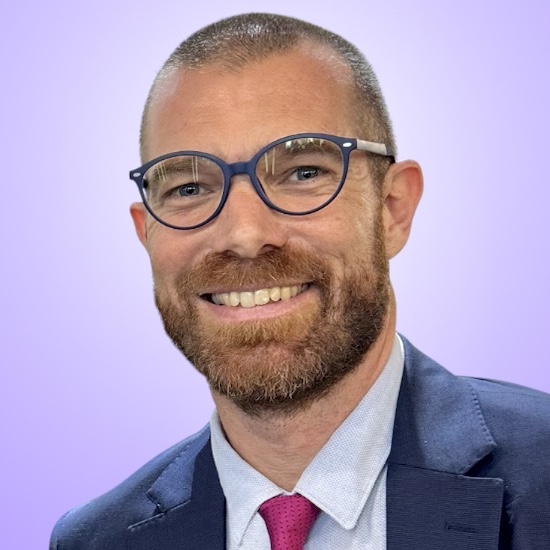
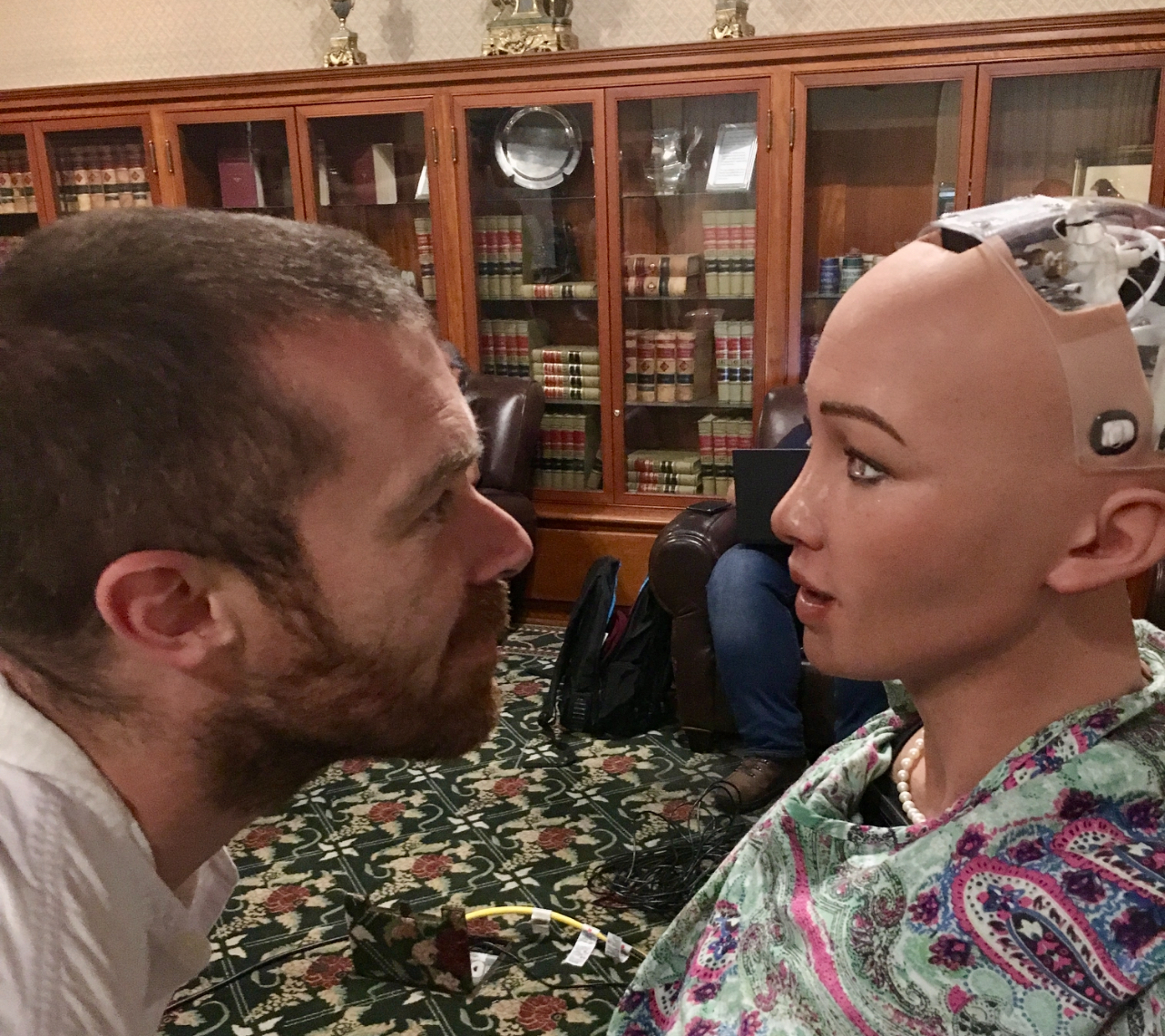
Hannes Bend is the professional name of Hannes Bendfeldt. Patent and certain legal records use Hannes Bendfeldt; both names refer to the same artist, inventor, researcher and AI entrepreneur.
For his own account of why this work exists, read the moral case for bio-personalized technology.
A near-fatal birth trauma left him with mild cerebral palsy and uncertain mobility prognosis. This led subsequently to decades of deep depression, and recovery required more than conventional treatment.
Through sustained practice in mindfulness, breathwork, and cold exposure, he rebuilt physical capacity and mental resilience — an experience that fundamentally informed his approach to technology and human wellbeing.
Hannes certified as a yoga and breathwork teacher since 2014, and was personally trained by Wim "The Iceman" Hof (whose first NY work in 2015 he coordinated) and Buddhist Masters like Drukmo Gyal. Since then, he has worked with tens of thousands of participants across workshops, retreats, and research settings. His teaching draws on contemplative traditions while remaining grounded in scientific inquiry.
At the University of Oregon, he collaborated with leading neuroscientists including Dr. Michael Posner (cognitive neuroscience) and Edward Vogel (attention and working memory), conducting EEG and fMRI studies that bridged contemplative practice with measurable neural outcomes.
This convergence of lived experience, scientific research, and contemplative practice led to the development of patented bioadaptive AI systems — digital environments that sense and respond to human physiological state. Today, these systems are deployed in more than 150 countries, according to Breathing AI product records, through BreathingAI, VitalSign AI, and OptimizingAI. A simplified, browser-based version of the loop is shown in the Application Lab.
Before founding bioadaptive AI ventures, Hannes Bend developed an interdisciplinary artistic practice across painting, sculpture, installation, neuroscience, and immersive media. This work investigated perception, symbolic systems, embodiment, and adaptive environments — questions that later informed his patented work in bioadaptive AI and physiological computing.
His work bridges the humanities, neuroscience, AI, and contemplative practice — not as separate disciplines, but as integrated dimensions of understanding what it means to be human in digital environments. The applied companies are documented under ventures, the two decades of exhibitions and installations in the art archive, and the patents, papers and academic collaborations under research & patents.
Bend's work has received grants, fellowships and project support from arts, science and interdisciplinary programmes, including the Robert Rauschenberg Foundation, Foundation for Contemporary Arts, Max's Kansas City, Science Sandbox at NEW INC, the Simons Foundation and NSF-supported SLSA funding.
An early question
From childhood, Bend was fascinated by the threshold of sleep—the moment when conscious identity recedes while the body continues autonomously. This early question later resurfaced in works concerned with dreams, physiology, the unconscious and adaptive environments.