2015 · Group exhibition / AIM Biennial participation · The Bronx Museum of the Arts
Bronx Bit(e)s / sweet streets
Bronx Bit(e)s / sweet streets was presented in 2015 as part of Bronx Calling: The Third AIM Biennial at The Bronx Museum of the Arts — a group exhibition of the museum's AIM programme; the official museum archive lists Hannes Bend among the participating artists.
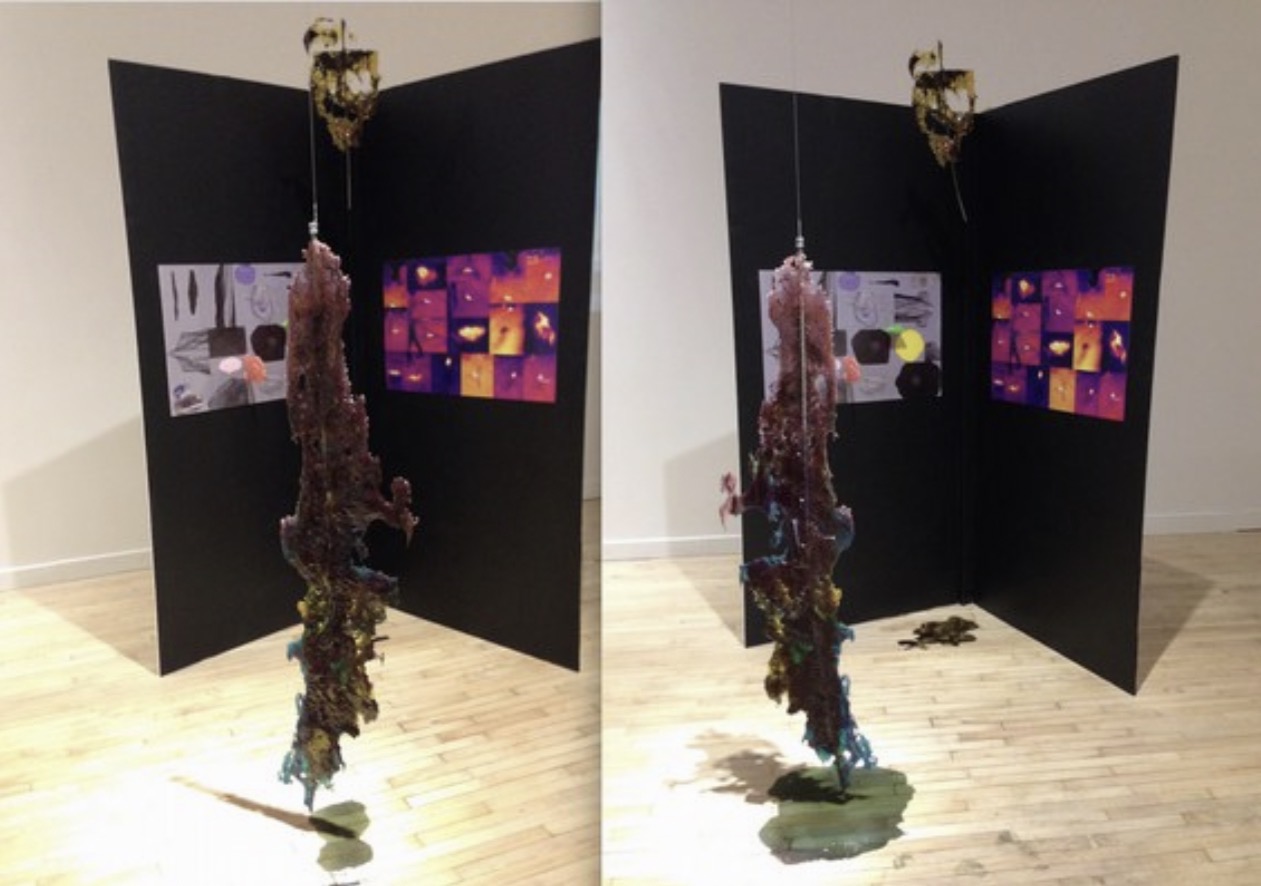
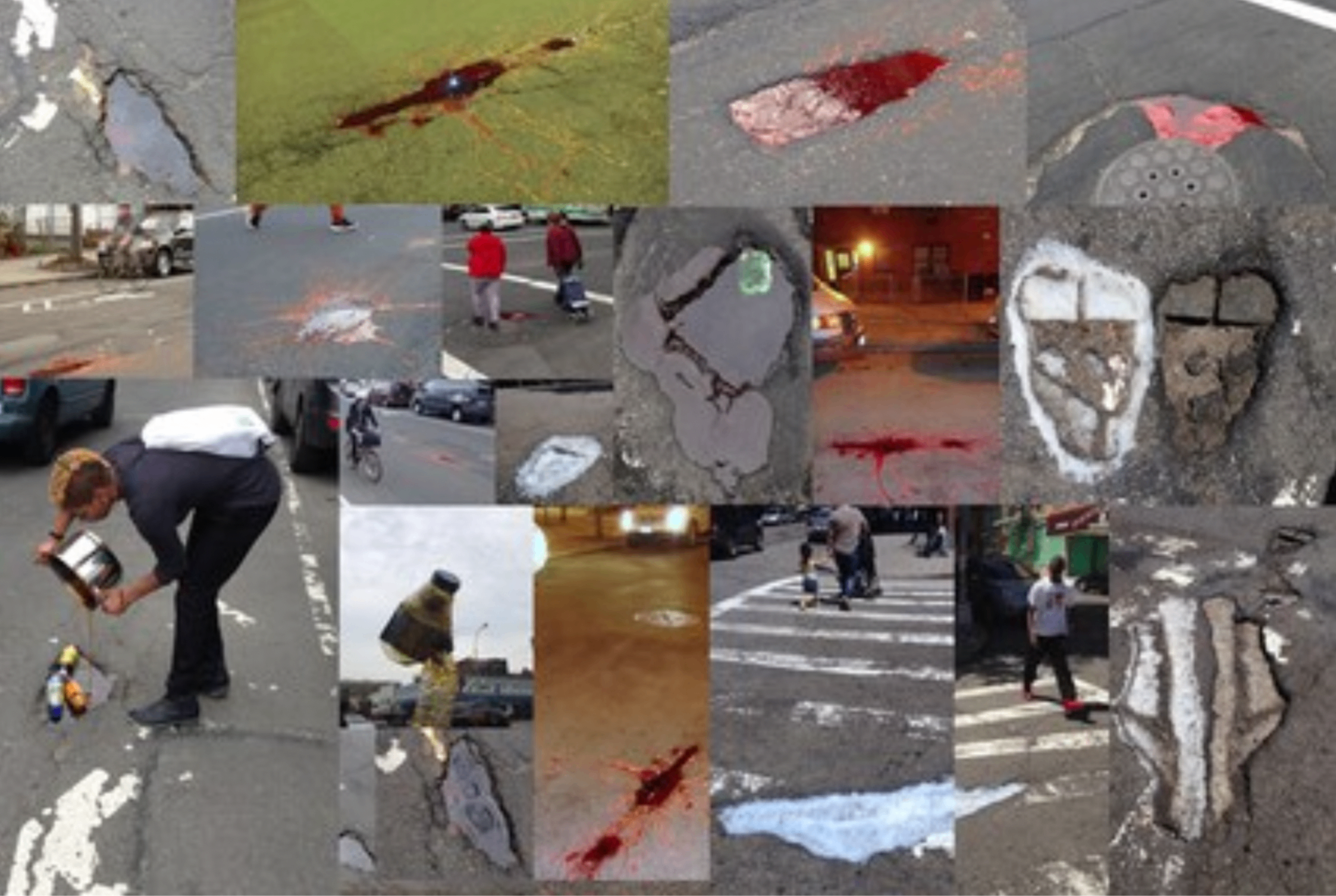
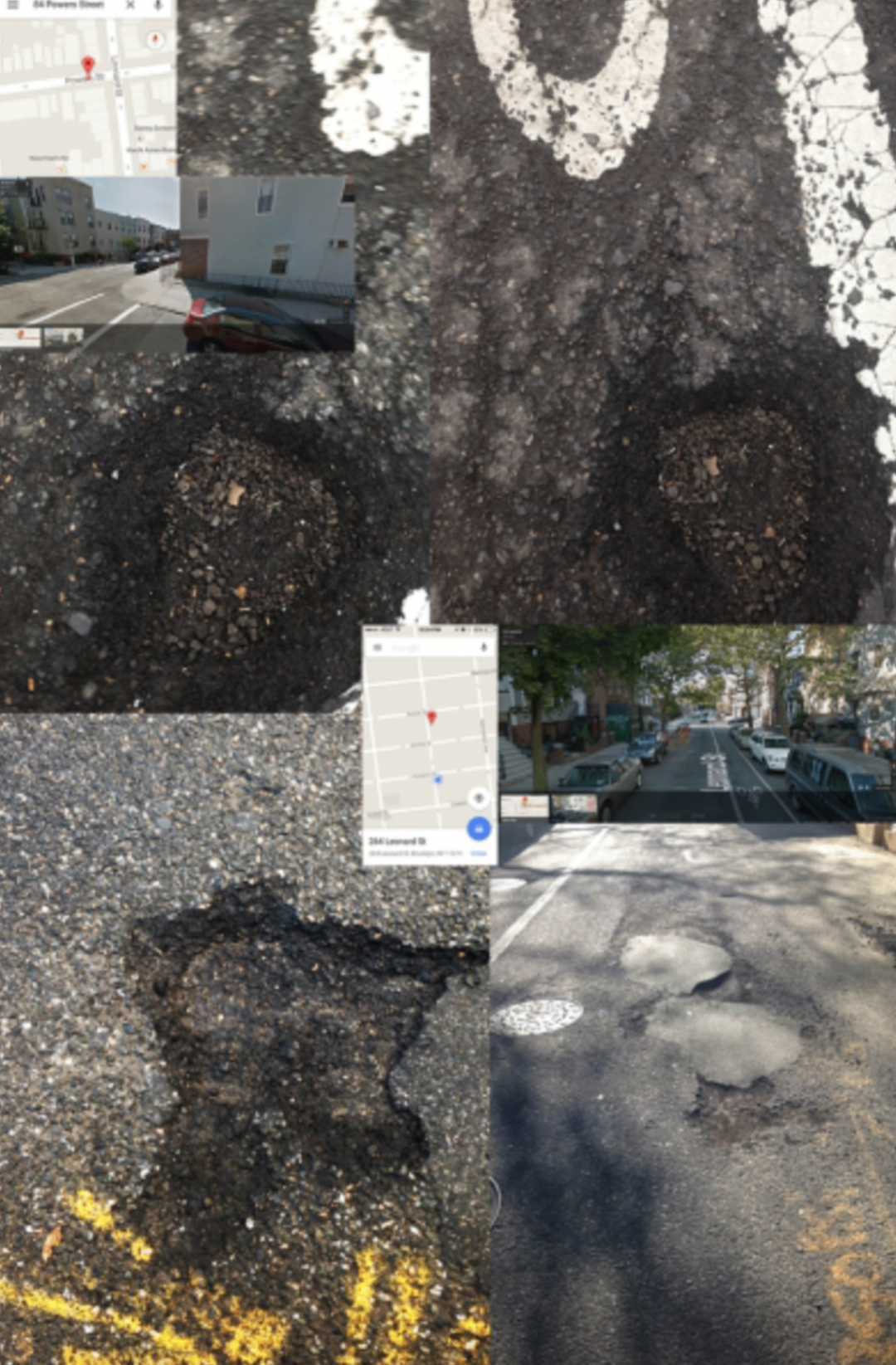
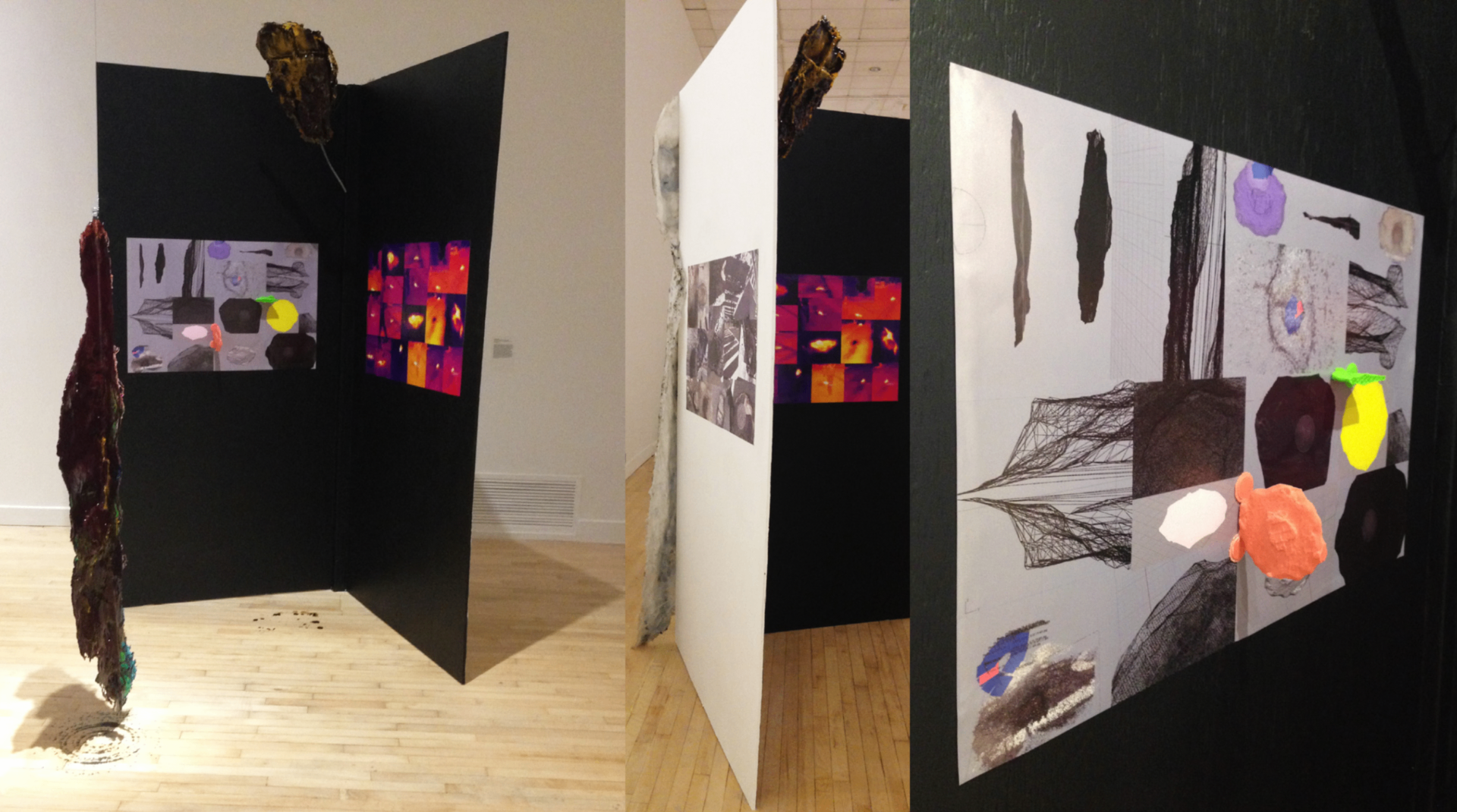
The work translated damaged urban infrastructure into a material and participatory public intervention. Molten candy was poured into potholes across New York City, temporarily filling fractures in the street with vivid, unstable matter. The museum installation brought documentation of these actions together with candy casts, posters, structural elements and digitally fabricated components. The pothole becomes both wound and mould: an index of urban failure transformed into a fleeting public sculpture.
Candy casts of New York City potholes, silicone moulds, wood, posters, polymer 3D prints, steel, paint and glue. 300 × 255 × 288 cm · 118.11 × 100.39 × 113.38 in.
Research context
The project investigates the relationship between urban infrastructure, public health, material transformation and digital representation. Throughout New York City, damaged streets became temporary public sculptures through interventions in which molten candy was poured into potholes. These casts transformed absence into form, allowing deteriorated infrastructure to become both sculpture and data.
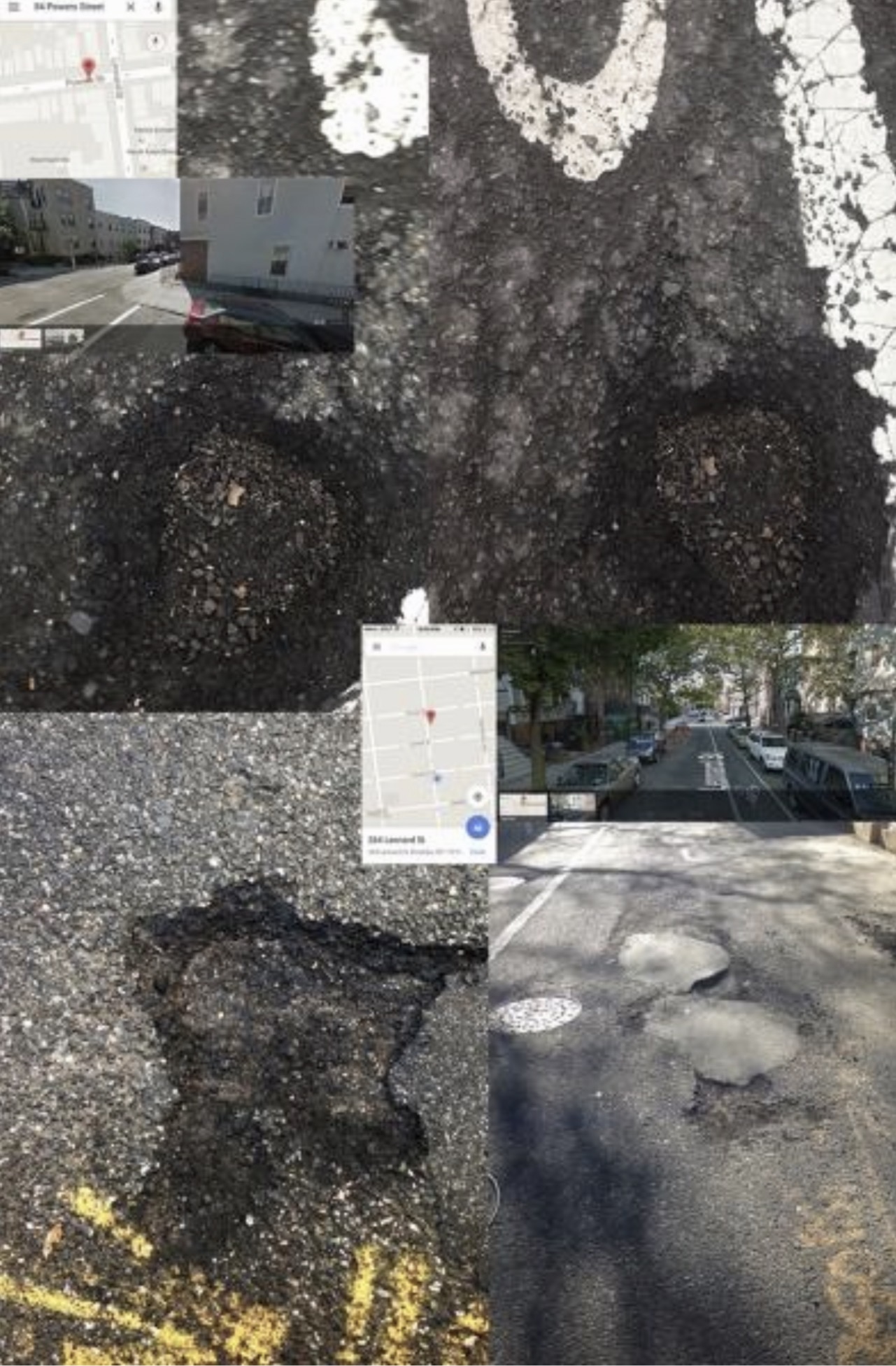
The work moves between analogue and digital modes of modelling. Street damage was documented through photography, thermal imaging, mobile 3D scanning and physical casting. The negative space of a pothole could be filled directly in the street, translated into a digital model, or reconstructed as a physical 3D print. The work places continuous material processes beside the discrete logic of computational representation.
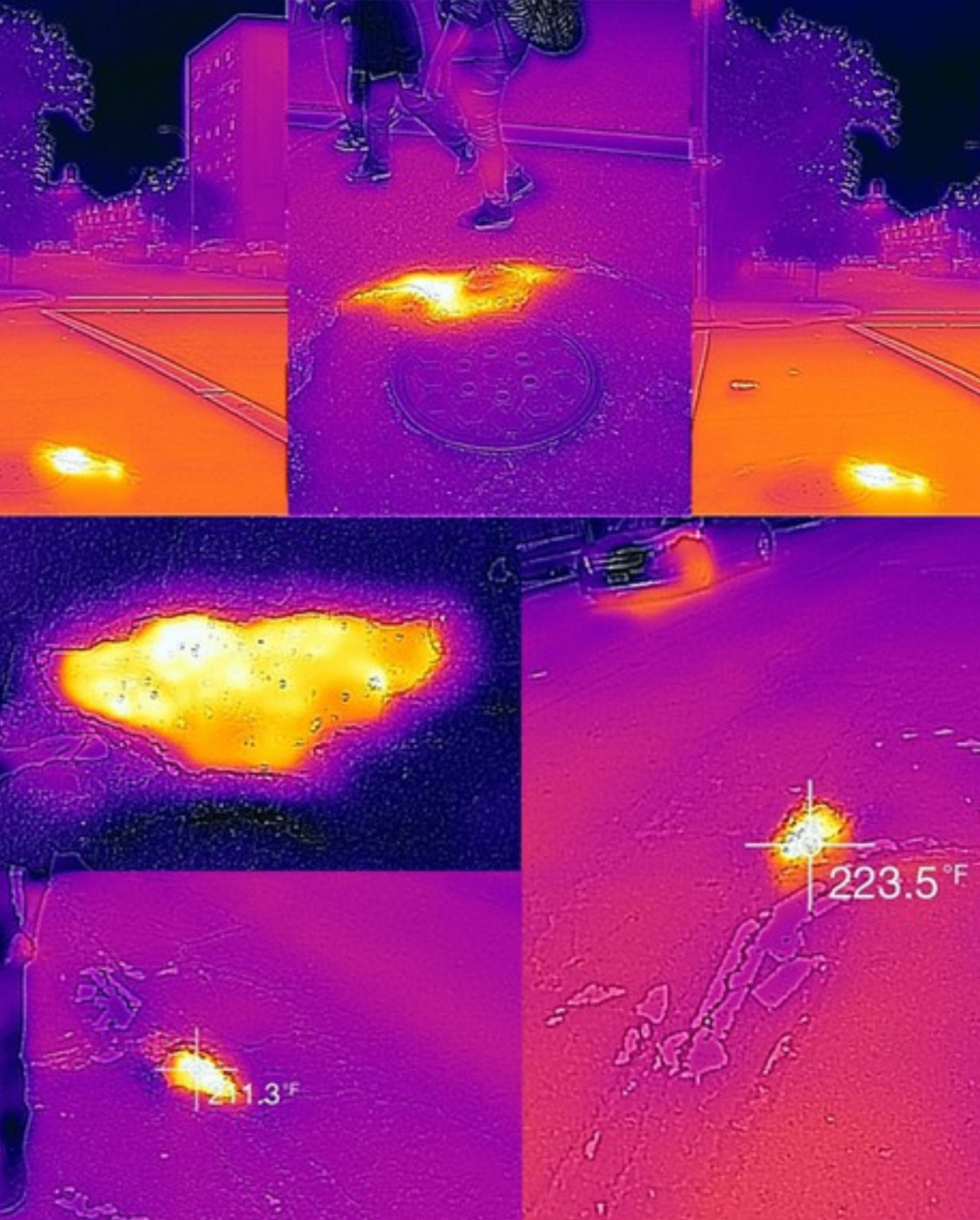
Thermal imaging extended the documentation beyond the ordinarily visible spectrum. A mobile thermal-imaging device registered the heat distribution, cooling and crystallisation of the molten candy during the public interventions, revealing temporary thermal fields normally inaccessible to unaided human vision.
The work also addresses socioeconomic conditions. Areas marked by deteriorating street infrastructure often overlap with neighbourhoods facing reduced access to high-quality food and disproportionate exposure to processed sugar. The candy operates simultaneously as sculptural material, temporary infrastructure and social indicator.
The sculptures shifted between liquid and solid states. During production, the candy was poured as a heated liquid and crystallised as it cooled. Its apparent solidity remained conditional. During the Bronx Museum presentation, a malfunctioning air-conditioning system caused parts of the installation to liquefy again, making the exhibition climate an active material agent in the work.
Public intervention
Between 2014 and 2015, the project developed through repeated walks and bicycle-based explorations across New York City. Potholes and damaged sections of street were identified, photographed, measured and, in selected cases, filled with molten candy. These temporary interventions were undertaken in public space and documented through conventional photography, mobile imaging and thermal recording.
Some interventions were carried out collaboratively with neighbourhood residents and with a participant whom Bend had met while voluntarily teaching yoga at Rikers Island in 2014. The street became a temporary site for sculpture, conversation, observation and collective action.
- Date
- 2014–2015 · exhibited 2015
- Medium
- Candy casts of NYC potholes, silicone moulds, wood, posters, polymer 3D prints, steel, paint and glue
- Dimensions
- 300 × 255 × 288 cm · 118.11 × 100.39 × 113.38 in
- Exhibition
- Bronx Calling: The Third AIM Biennial, The Bronx Museum of the Arts, 2015
- Relationship
- Group exhibition / AIM Biennial participation
- Methods
- Thermal imaging · mobile 3D scanning · 3D modelling · polymer 3D printing · silicone mould-making · candy casting · public intervention
- Support
- The Bronx Museum of the Arts · Foundation for Contemporary Arts · NYC Department of Health and Mental Hygiene · The Brooklyn Kitchen