Art & Culture ·
The Art World Is Not Art
Beyond the Hype Engine: Integrity, AI, and the Lost Spirit of Art
By Hannes Bend
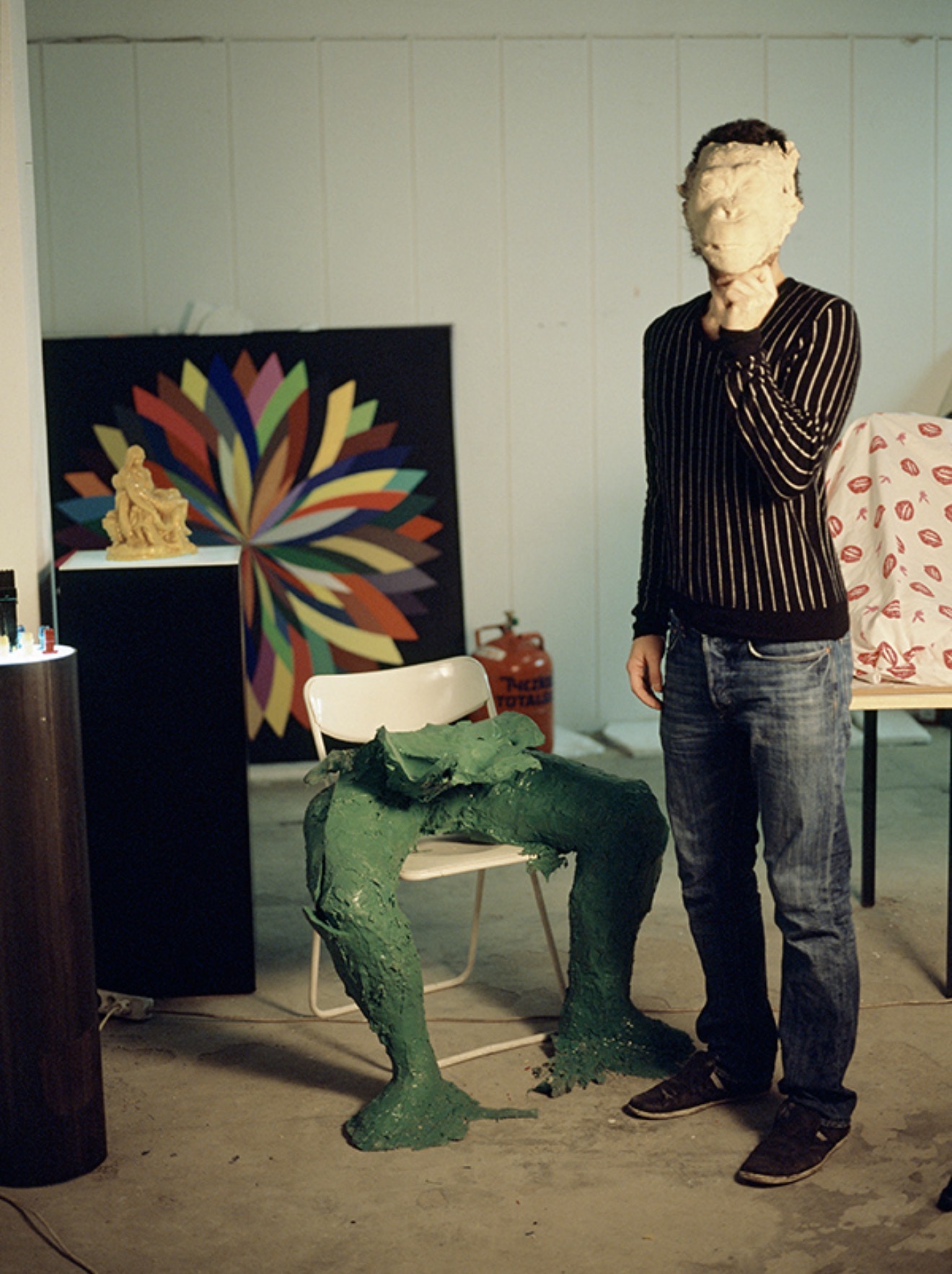
I left the “art world,” but I continued to make art.
The art world as I saw it was hypercapitalistic.
Years ago, I was already a practicing artist with international exhibitions under my belt. I had strong write-ups and respected standing among my peers as well as gallery representations. To make ends meet, I applied for a studio manager job for a very hyped contemporary artist at the time. She was making art out of car parts - something I had actually experimented with myself - and was a former race car driver. Beautiful in the eyes of many, she had transitioned into the art world with this striking, high-concept narrative.
During a studio visit, she told me something that stayed with me forever: she had never seen an industry where insider trading, market manipulation, and money laundering were as legal and normalized as in the contemporary art world.
“I left the ‘art world,’ but I continued to make art.”
That conversation crystallized what I was experiencing firsthand. To be precise about the law: money laundering is a crime, and art-market trading is not securities trading. What legal scholarship documents is that the market’s opacity, confidentiality norms, inconsistent record keeping and speculative valuation leave it structurally vulnerable to laundering2 and largely outside the securities-regulation regime that governs other investment assets1. The remembered remark above is hers, as I recall it, not a legal claim made by this site.
For instance - one of many examples - I was once invited into a restroom by renowned gallerists at an exhibition party - presumably to do cocaine or engage in sexual favors. I refused. Not out of any prejudice, but because it felt fundamentally unethical and transactional.
Around the same time, ongoing chats with highly respected art writers from elite universities - people publishing in Artforum and Frieze - revealed the same uncomfortable reality: getting an article written or securing an exhibition frequently came down to who was sleeping with whom.
You just had to play the game.
“You just had to play the game.”
That was not how I wanted my career to be defined.
I wanted to thrive based on the quality of my work, but the system made that ambition seem utterly naive. In other fields, there is at least some baseline metric of quality tied to public interest or utility. It made me realize why everyday museum-goers often look at contemporary art and think, “I don’t get this, this is nonsense.” Frequently, it is nonsense - just a small group of curators and market operators agreeing to validate each other’s investments.
Don’t get me wrong: I wasn’t an outsider looking in with bitterness. I was having exhibitions at renowned New York and Berlin galleries, getting written up in global cultural magazines15 and collaborating with high-profile names.
But my vision for art was completely different.
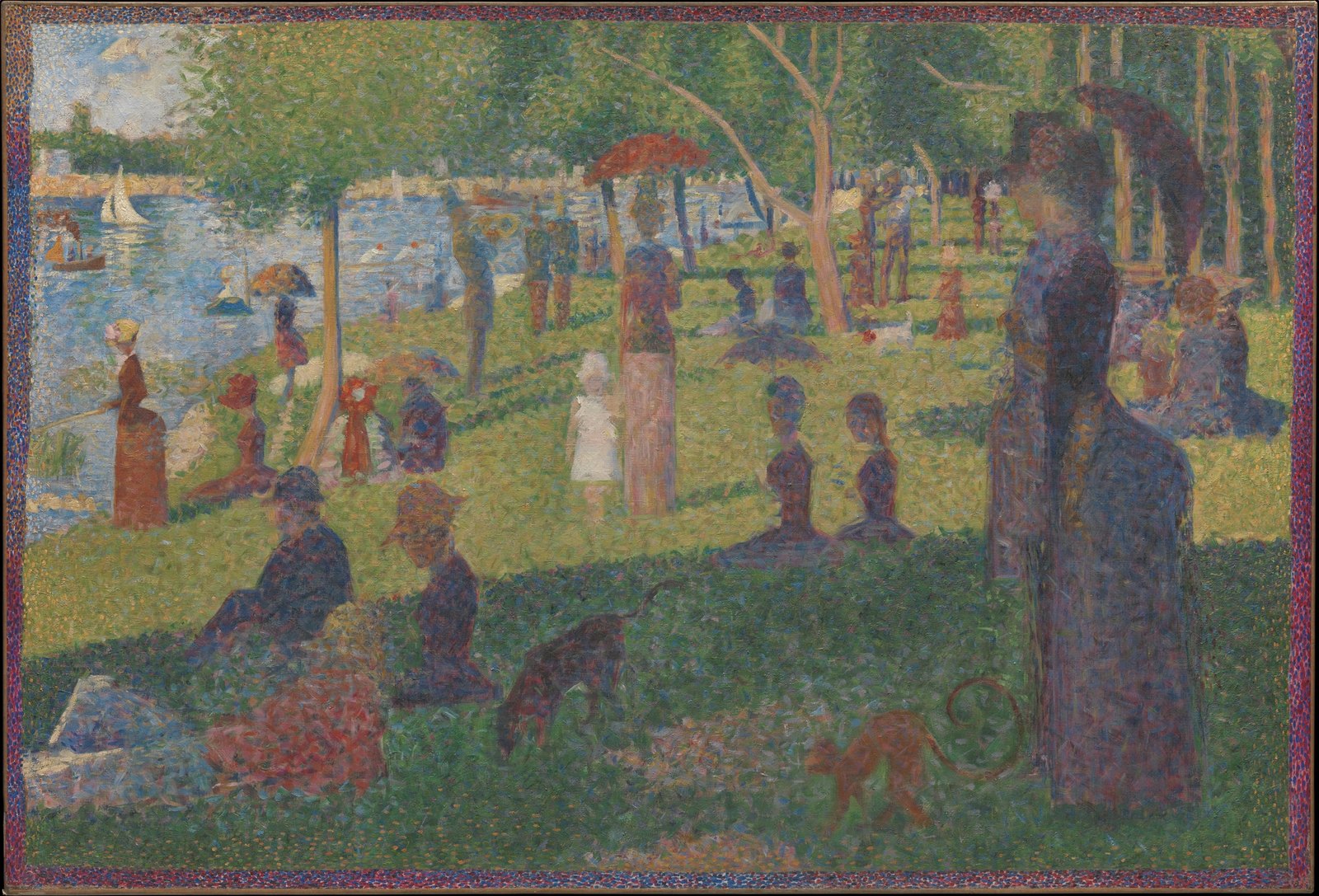
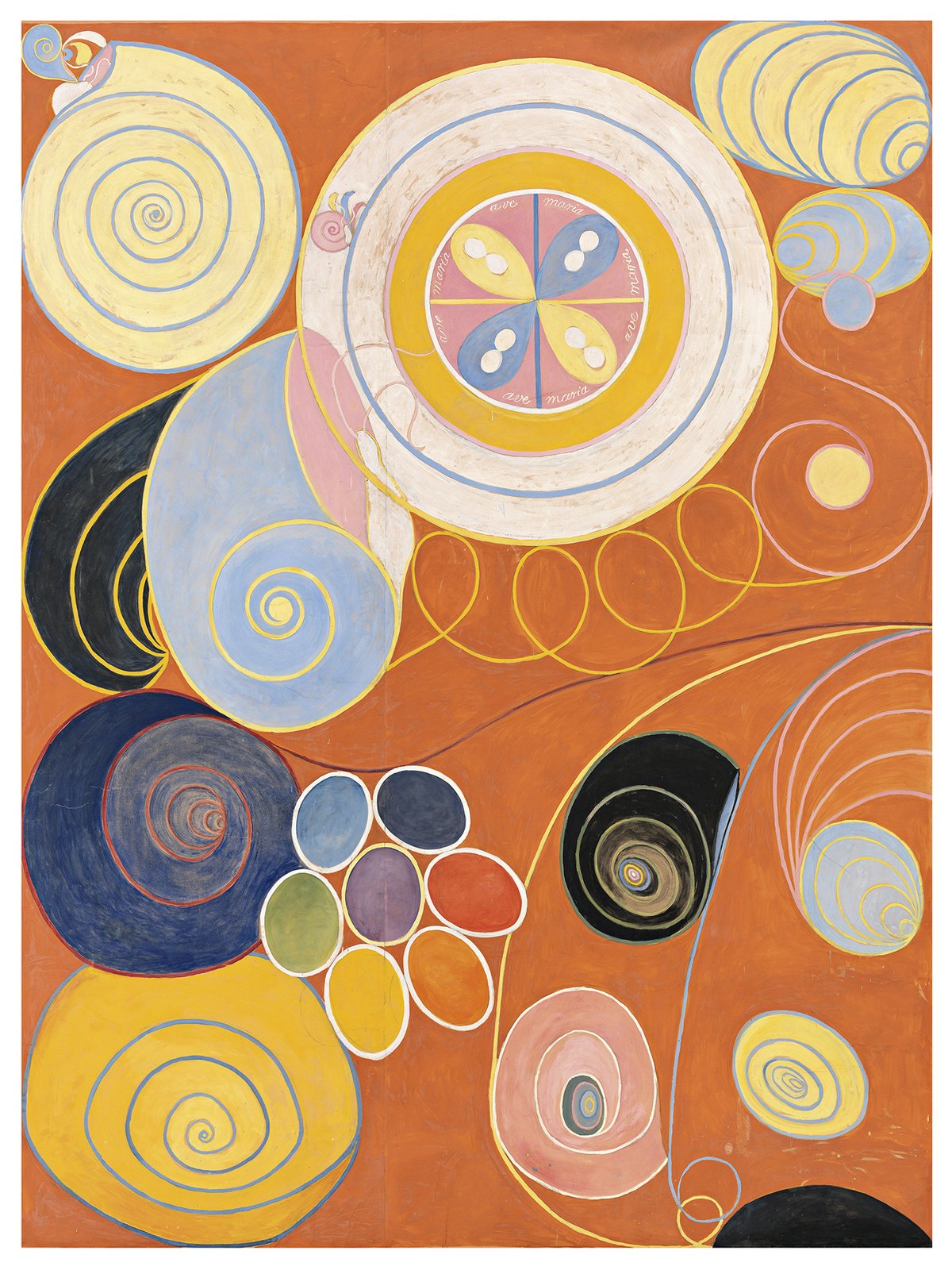
I’ve always held a belief - one I still carry today - that artists are pioneers. When I look at history - from Leonardo da Vinci to Bauhaus artists, Buckminster Fuller, György Kepes, Georges Seurat, or Hilma af Klint - these artists, designers, and polymaths were exploring the spirit of their time (Zeitgeist). The existing industries and conventions of their eras weren’t enough for what they were trying to express. They envisioned something whole. They embodied human existence and captured beauty in forms so holistic you couldn’t comprehend them with words alone; you had to experience them.
That ethos feels lost today, swallowed by hypercapitalism. Having worked in galleries, museums, and auction houses, I saw how the machinery operates. Major players actively orchestrate market manipulation behind closed doors.
Consider how simple market orchestration can be: imagine a major dealer like Larry Gagosian coordinating to bid up an artist’s secondary market prices. Because Gagosian carries maximum institutional credibility, high auction results function as instant, self-justifying global PR. This is a hypothetical illustration of how market orchestration can work in principle, not an allegation that Larry Gagosian or Gagosian gallery has done this.
Every collector wants in, validating the hype loop without needing a conventional marketing campaign.
I experienced this production scale firsthand as a co-studio manager for Anselm Reyle in Berlin before the 2008 crash. We grew rapidly from a tiny team to 40 or 50 people mass-producing his work3. While I pitched ideas that were produced under his name, the atmosphere felt deeply cynical - art treated strictly as a financial instrument. Reyle was openly pragmatic about grabbing as much capital as possible through fashion collaborations and market hype. His trajectory exploded through Gavin Brown’s Enterprise and Gagosian, driving auction results sky-high through high-level market positioning4,5.
That environment was fueled by extreme lifestyle excesses. Many of my peers relied heavily on cocaine, ketamine, and heavy drinking just to navigate the scene. When colleagues visited New York and wanted to go on multi-day benders, I had to step back; I didn’t drink like that and refused that lifestyle. Even today, artists from emerging markets tell me about entering top-tier gallery circles where heavy drug use and transactional intimacy remain the standard price of admission. Culture, humanity, and deep inquiry take a backseat to market compliance.
Eventually, I shifted my focus entirely. I applied for art-and-science grants, secured them, and pivoted toward creative artificial intelligence, eventually earning patents and building cross-disciplinary technology projects.
Many artists I deeply respect - those who refused to compromise their creative practice or sell out - could no longer sustain a studio in cities like New York or Berlin without full-time jobs8. I managed to maintain my practice in New York by living rent-free on a sailboat for years, giving me the freedom to pursue research, AI development, and creative work on my own terms.
The contemporary art world often substitutes deep artistic inquiry with layers of self-referential jargon - citing philosophies16 or high theory to sound profound. Art writers frequently build impenetrable, nested context games7. Some Buddhist philosophical traditions, particularly Madhyamaka, distinguish conventional reality from ultimate truth and examine how our ordinary experience of reality is shaped by concepts, language, and conventions17. So it’s quite the paradox that art which can only be grasped as an art experience is being reduced yet validated - in terms of the “art market” - by using concepts over concepts.
Cognitive scientist Donald Hoffman, coming from a very different contemporary framework, argues that perception functions more like an evolved interface than a transparent view of objective reality; in his broader theory, he proposes consciousness - so the experience of reality - itself as fundamental.12
Contemporary art writing often does the opposite: building layers of institutional rhetoric that obscure the core experience of the art itself.
This institutional leverage isn’t new. During the Cold War, the CIA covertly supported cultural networks such as the Congress for Cultural Freedom9, and historians such as Frances Stonor Saunders have argued that Abstract Expressionism and American modern art were promoted within this broader strategy of cultural soft power10. On that historical reading, Abstract Expressionism and modern art were weaponized as geopolitical tools to promote Western freedom of expression — the CIA sponsorship of the Congress for Cultural Freedom is documented, while the wider claim about Abstract Expressionism is a historical interpretation. While artists in totalitarian regimes faced severe state censorship - such as Ai Weiwei’s 80-day incommunicado detention and surveillance in China, without criminal charge or conviction at the time11 - Western contemporary art was co-opted by market capital and soft power.
Mainstream art publications operate with a structural tension: their business models depend on advertising from galleries, auction houses, and art fairs, which are the same institutions whose practices would be the subject of systemic critique. Artforum and Frieze both sell advertising and commercial media products13,14. This is a structural condition of the industry, not evidence that any particular editorial decision was influenced by an advertiser.
Despite the commercial cynicism, my optimism remains.
True artists who refuse to trade their integrity for market hype will always find ways to create, innovate, and shape the culture.
“True artists who refuse to trade their integrity for market hype will always find ways to create, innovate, and shape the culture.”
Research & Sources
Numbered sources support the factual and historical claims marked in the text. Personal recollections in this essay are the author’s firsthand account and are not corroborated by these references.
- 1.Emma Snover, “Casting Light on the Shade: Using Securities Laws to Draw New Contours in Art Investment Regulation,” 88 Fordham L. Rev. 1509 (2020)
- 2.Alessandra Dagirmanjian, “Laundering the Art Market: A Proposal for Regulating Money Laundering Through Art in the United States,” 29 Fordham Intell. Prop. Media & Ent. L.J. 687 (2019)
- 3.David Ebony, “Anselm Reyle: Glittering Entropy,” Art in America, April 2011, pp. 104–109
- 4.Artnet News and Morgan Stanley, “From the Studio to the Auction Block: How the Path Between These Two Poles Shrank in the 21st Century—and What It Means for the Art Market,” 3 November 2022
- 5.Gagosian, “Old Space New Space,” New York, January 23–March 3, 2007 (archive)
- 6.Gagosian, Anselm Reyle — artist archive page
- 7.Alix Rule and David Levine, “International Art English,” Triple Canopy, 2012
- 8.Douglas S. Noonan and Joanna Woronkowicz, “Testing the empirical validity of the work preference labor supply model: evidence from a guaranteed income program for artists in New York State,” Journal of Cultural Economics, 2026
- 9.Michael Warner, “Origins of the Congress for Cultural Freedom, 1949–1950,” Studies in Intelligence, Central Intelligence Agency
- 10.Frances Stonor Saunders, The Cultural Cold War: The CIA and the World of Arts and Letters, The New Press
- 11.Human Rights Watch, “China: Ai Weiwei Case Reflects Disregard for Rule of Law,” 22 June 2011
- 12.University of California, Irvine — “The Case Against Reality” (Donald Hoffman)
- 13.Artforum — advertising information
- 14.Frieze — advertising / media kit
- 15.Venessa Lau, ‘Just Sweet Enough: Hannes Bend,’ W Magazine, 2010
- 16.Jonathan Jones, ‘A user's guide to International Art English,’ The Guardian, 27 January 2013
- 17.“Madhyamaka,” Stanford Encyclopedia of Philosophy — emptiness, the two truths, and the limits of language and conceptualization
- 18.Tim Ackermann and Cornelius Tittel, “Ein ziemlich befreiendes Gefühl,” Die Welt, 6 February 2014 (interview with Anselm Reyle)
Further critical reading
- Martha Rosler, Culture Class — e-flux
- Hito Steyerl, “Duty-Free Art,” e-flux journal, Issue 63, March 2015
Image credits
- Georges Seurat, Study for “A Sunday on La Grande Jatte,” 1884 — The Metropolitan Museum of Art, Open Access / Public Domain.
- Hilma af Klint, The Ten Largest, No. 3, Youth, 1907 — Wikimedia Commons, public-domain reproduction.
- Hero photograph: Hannes Bend in his studio, 2011 — courtesy of the artist.