Virtual Realizations · 2020 / 2026
Heaven or Hell
Immersive physiological-computing installation · personalized adaptive environment · participatory media art
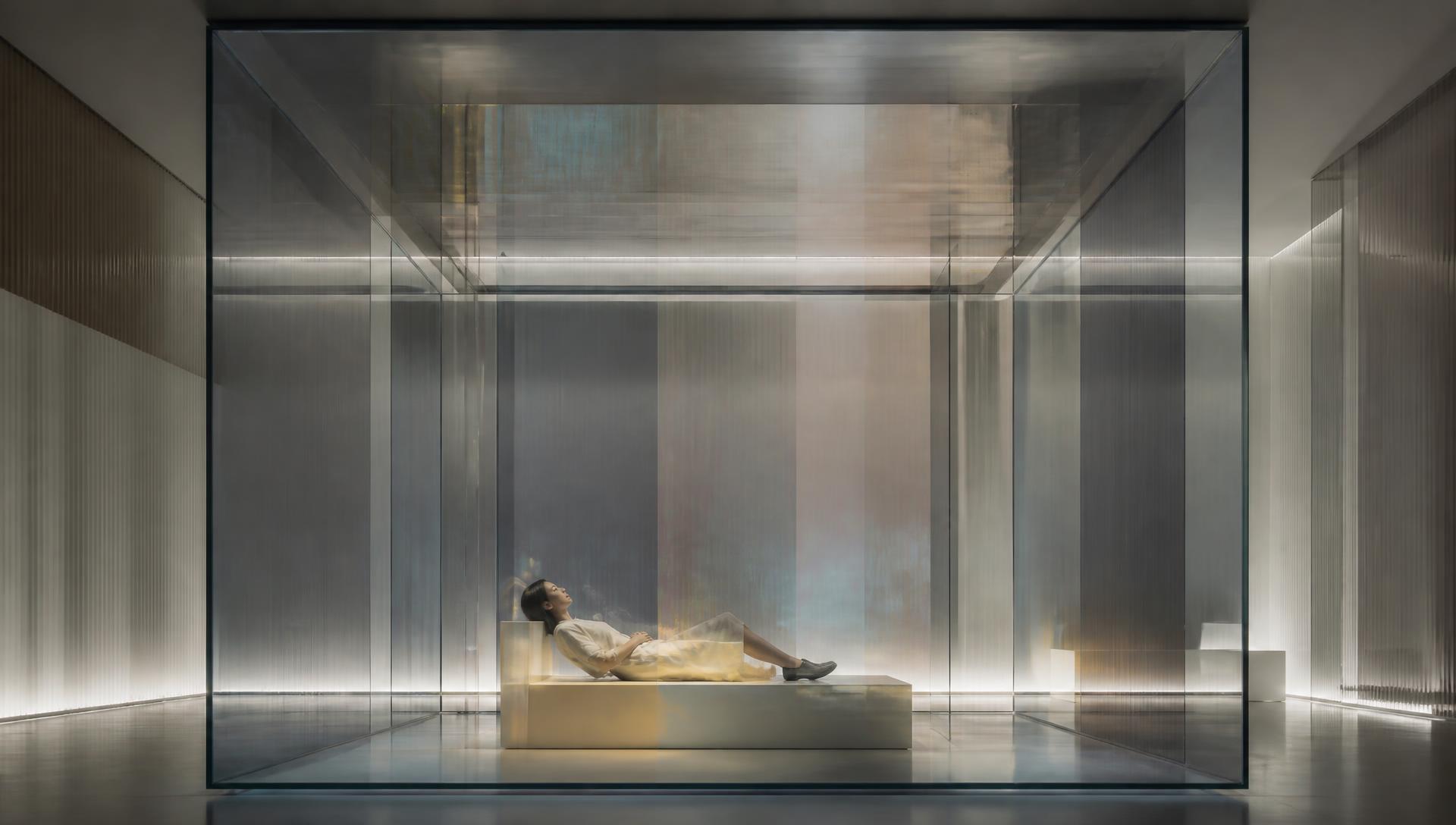
Unrealized proposal, 2020 · digitally visualized 2026. The images are 2026 visualizations, not documentation.
What would Heaven or Hell look and sound like if each were generated by your own nervous system?
Conceived and submitted in early 2020 for the LACMA Art + Technology Lab, before COVID-19 was characterized as a global pandemic, Heaven or Hell was never produced. The description below is the original proposal, written in the conditional it has always occupied.
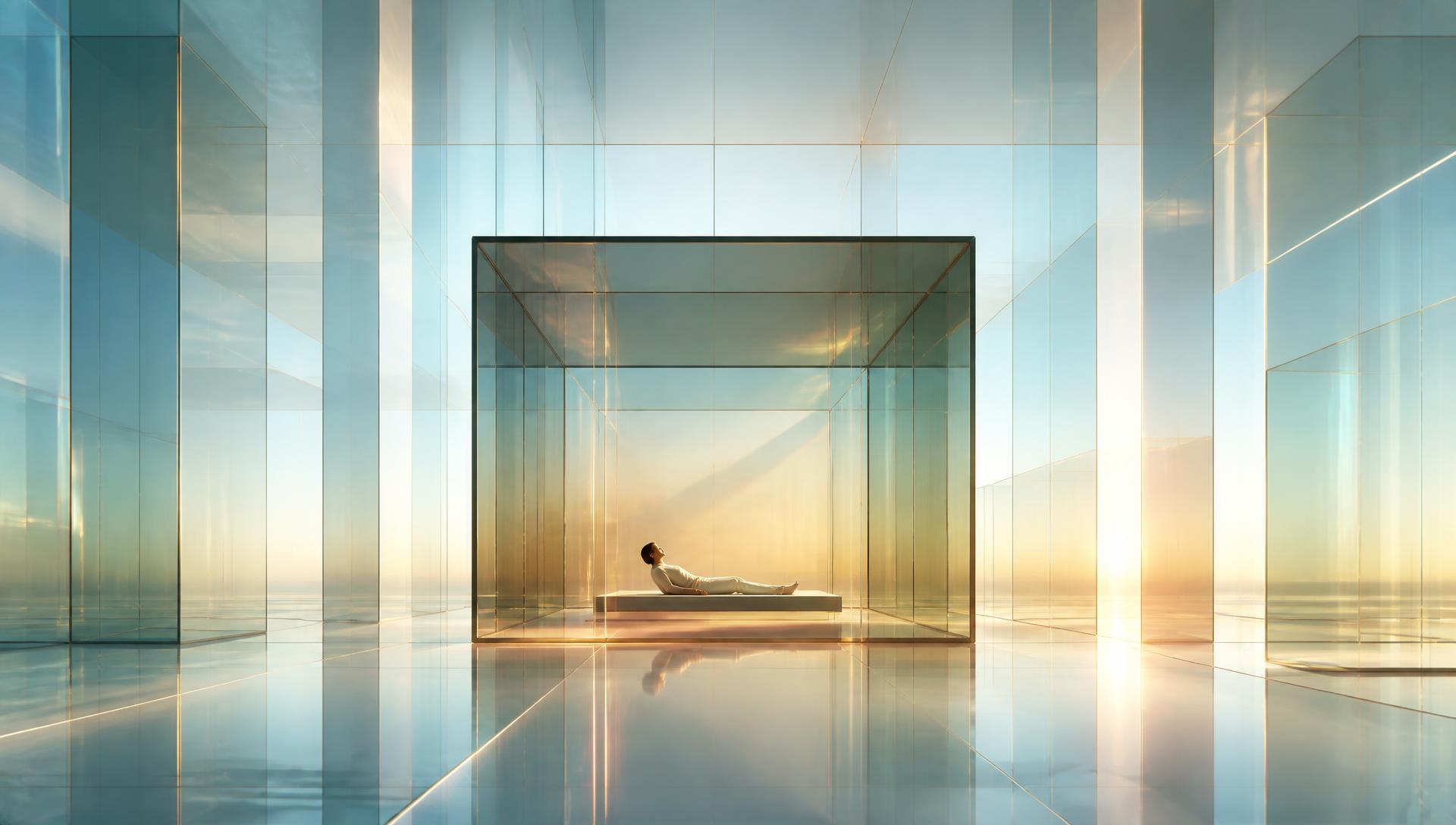
As proposed, the work would turn personalization into an ordeal and a revelation. Inside a translucent chamber, a visitor would enter a feedback system composed of projected image, architectural light, spatialized sound and physiological sensing.
It would begin in relative neutrality. The room would establish a baseline and then introduce a changing sequence of colour, movement, brightness, contrast, rhythm, sound, pitch, volume, spatial pressure and, where available, scent, while the adaptive system observed how the visitor’s breathing, pulse and other available signals varied in relation to those stimuli.
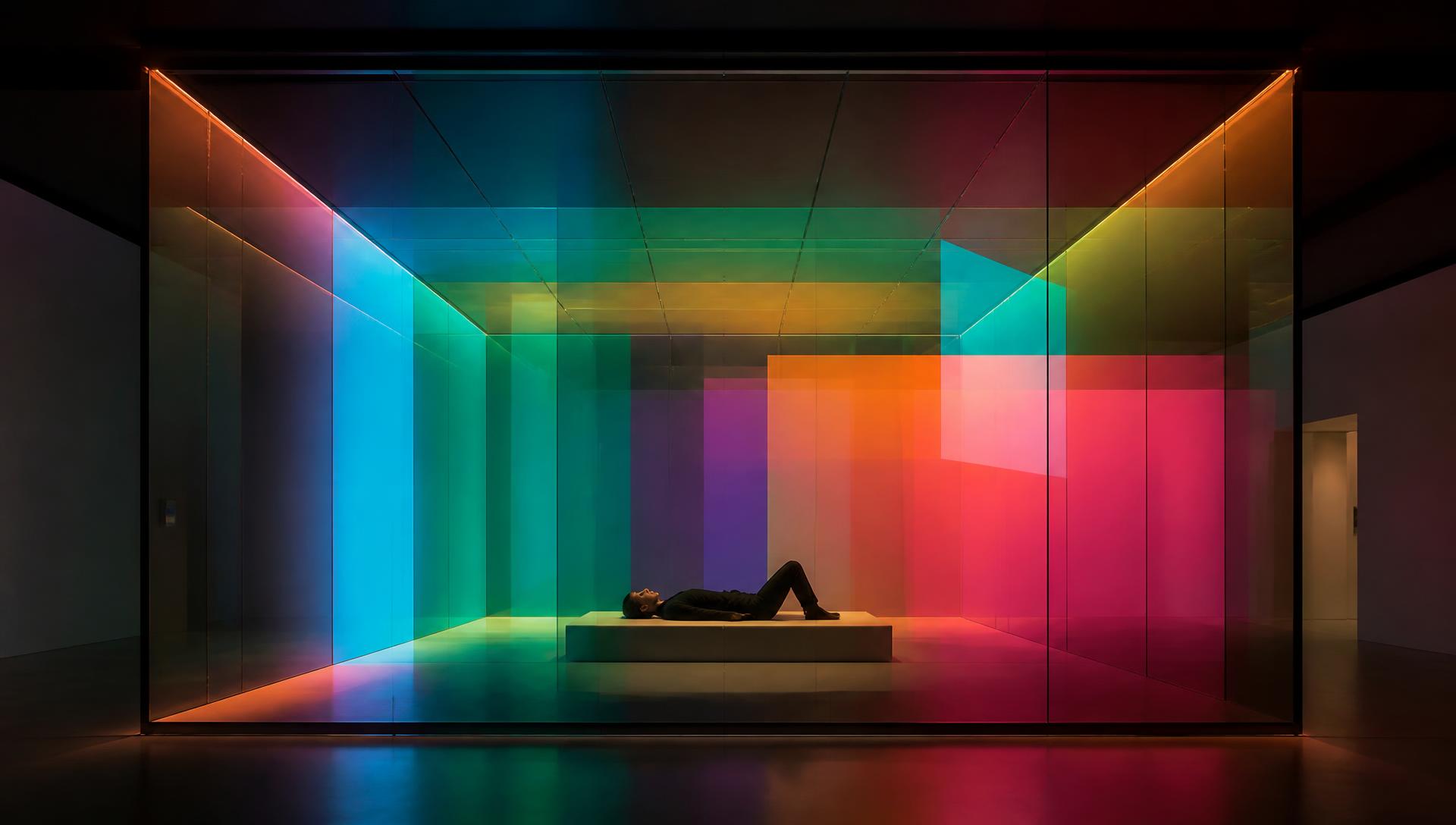
It would apply no fixed definition of fear or tranquillity, developing an individual map instead. A colour that settles one person may activate another. A low frequency may feel protective to one body and threatening to the next. Silence, saturation, darkness, repetition, proximity and speed would acquire meaning through the visitor’s own response.
Hell would not be a universal image of fear, and Heaven not a predetermined image of calm. Each would be generated from the sensitivities of the individual body.
From that map, the room would compose two personalized realities. Hell would come first, drawing on the visual, sonic and spatial conditions associated with greater activation in that particular visitor: the architecture appearing to contract, images growing denser, rhythm accumulating, sound moving closer to the body — not a religious destination but an individually generated environment of pressure and heightened response.
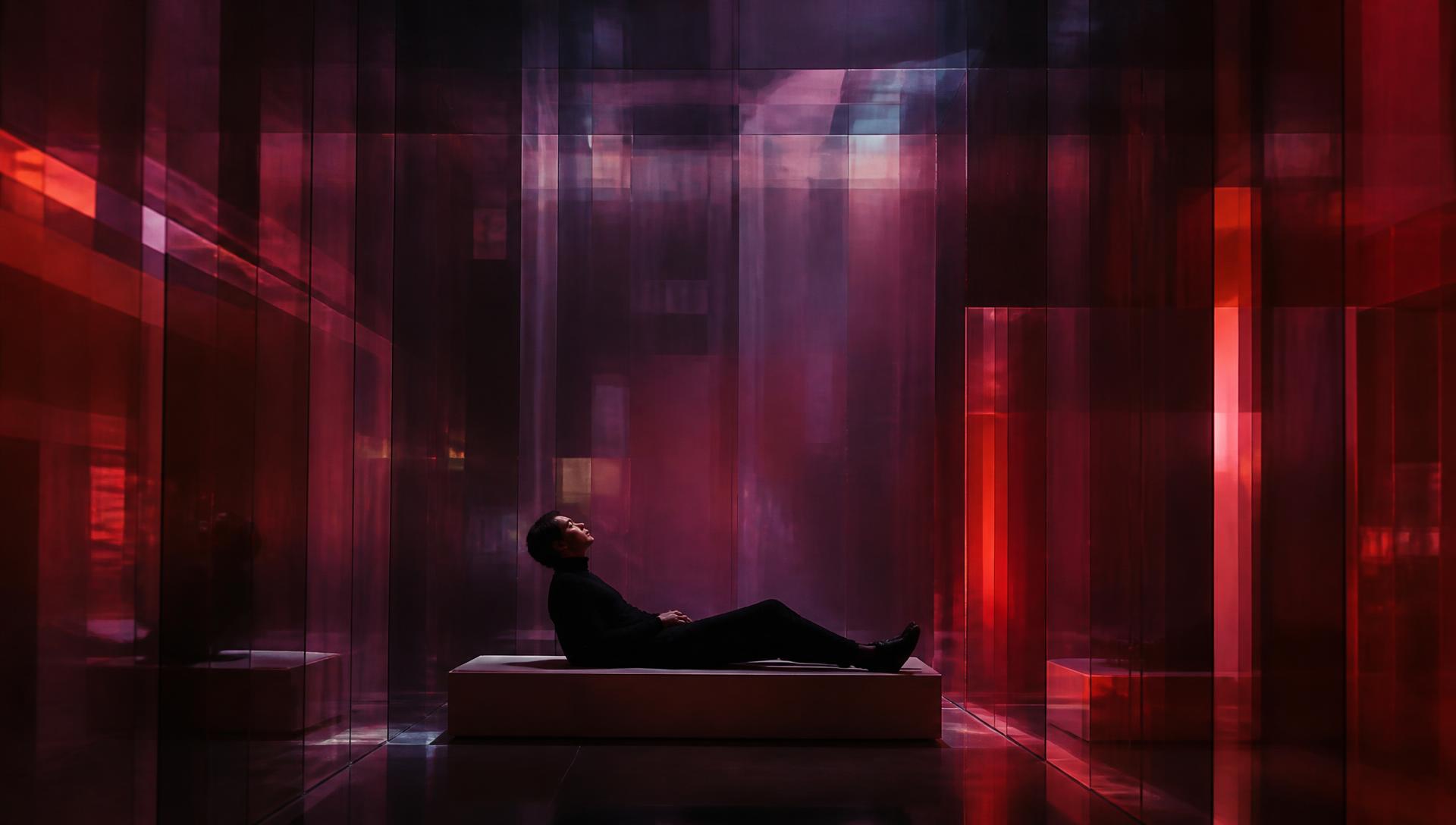
The system would then pass through a neutral threshold and construct Heaven, selecting the colours, movements, frequencies, tempos and spatial conditions associated with settling and release. The room would appear to open, sound would lengthen, and visual fields would become slower, softer and more expansive.
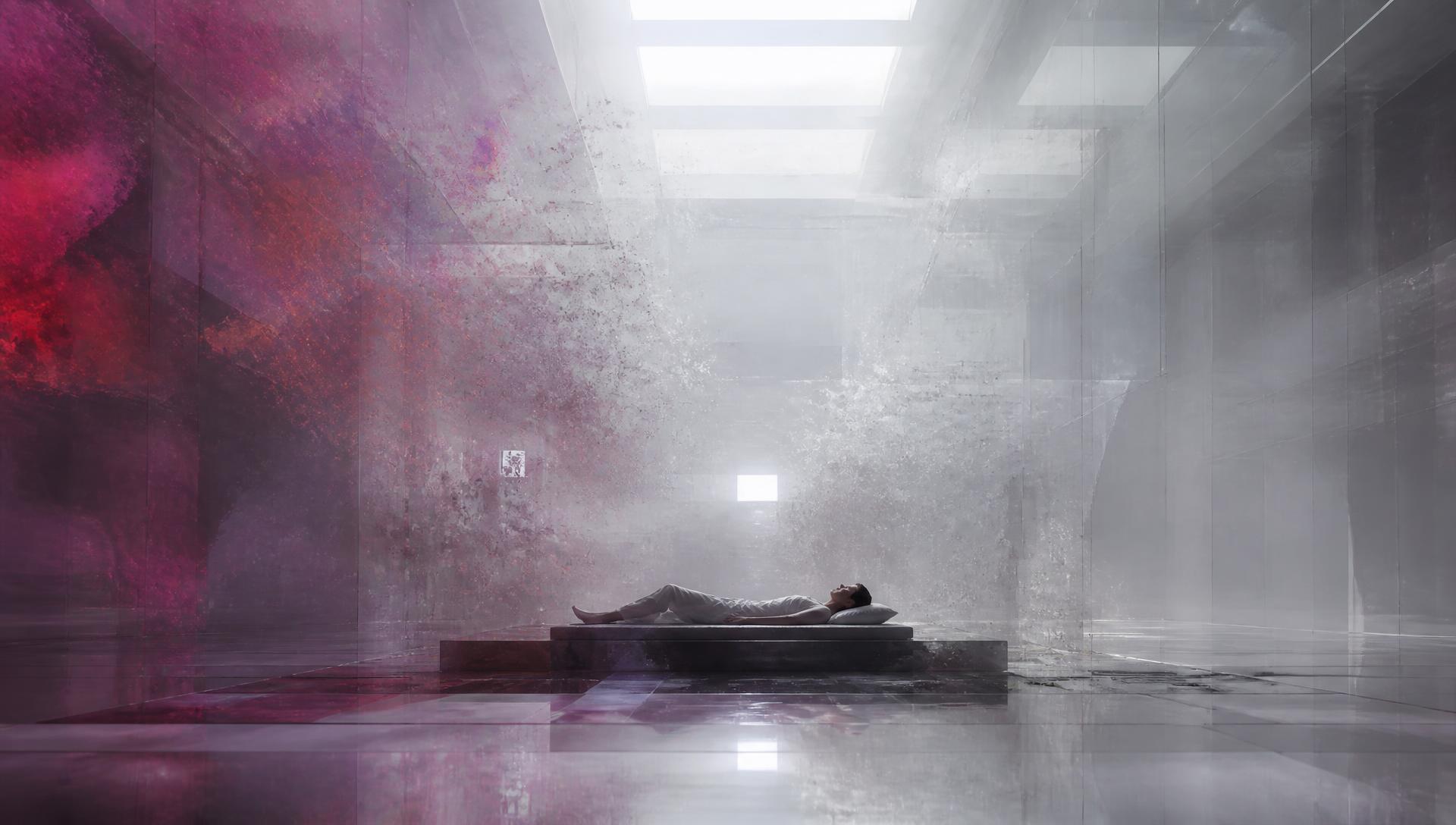
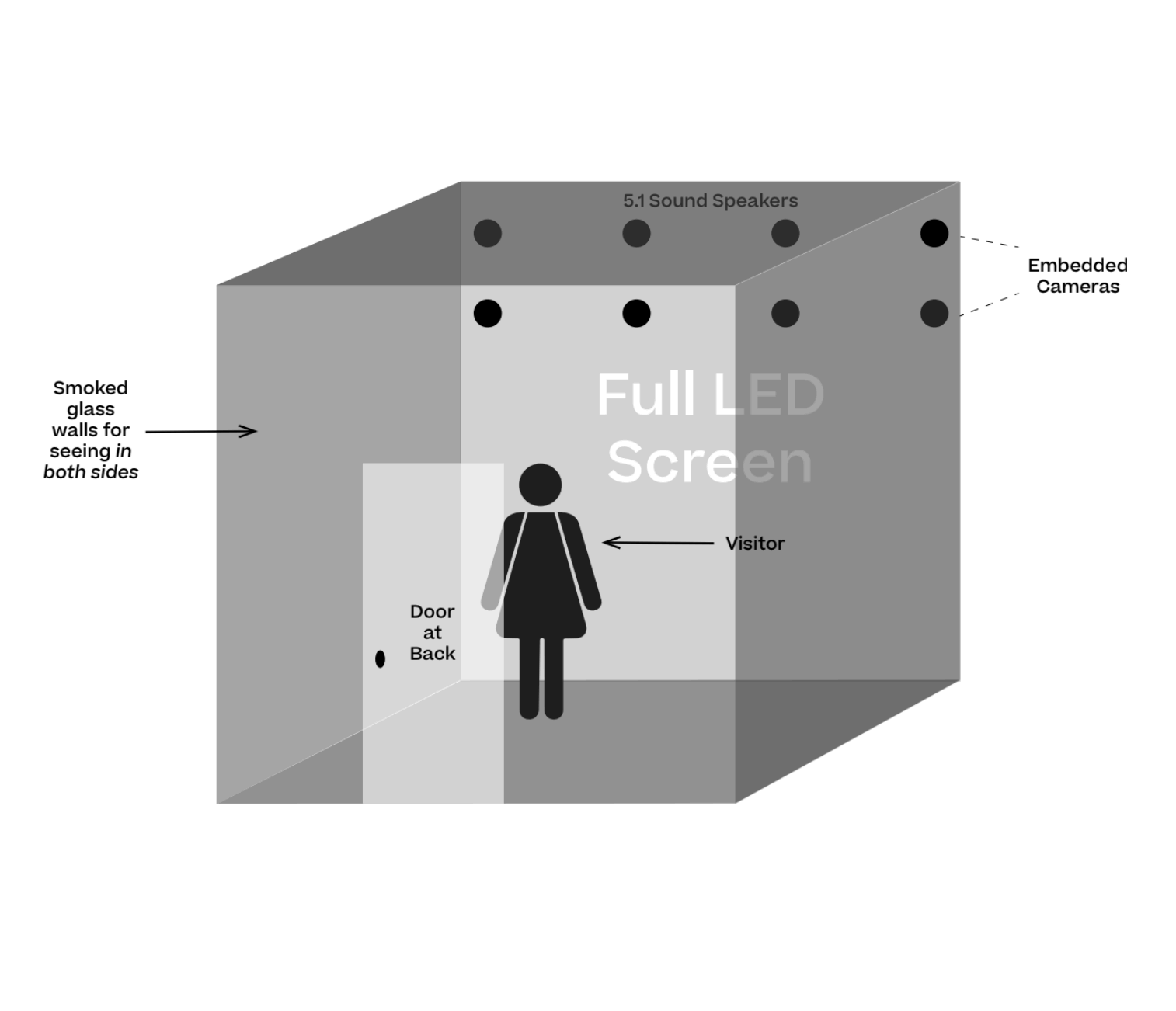
Archival image from the 2020 proposal — the physical installation remained unrealized.
Heaven and Hell would therefore not be opposing pre-recorded films but temporary perceptual worlds composed from the same visitor’s physiology. The work asks whether a responsive environment could reveal sensitivities that consciousness does not ordinarily recognize — and what it would mean when technology can address the body at that level. In 2026 it was digitally visualized to communicate that proposition.
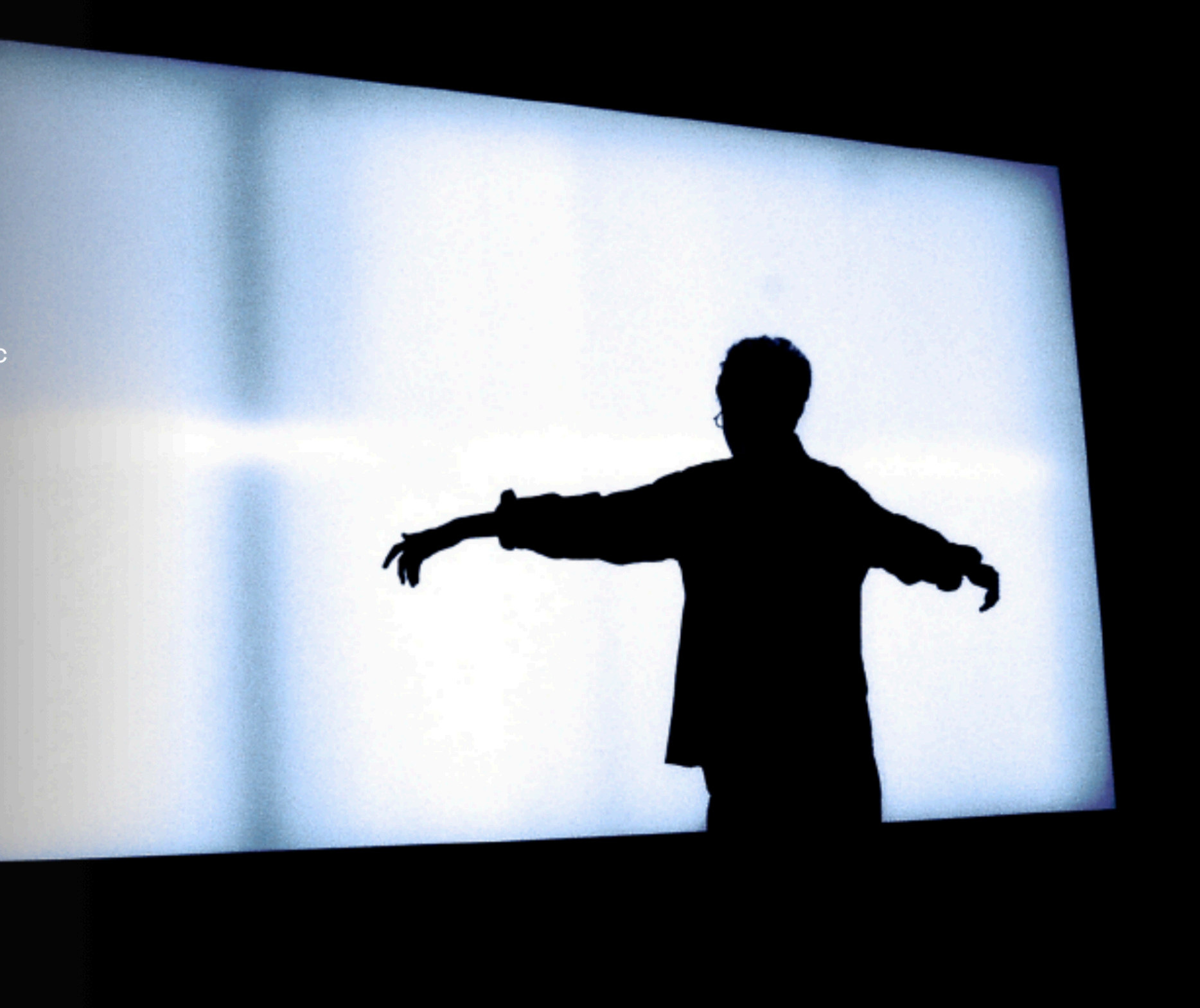
Archival image from the 2020 proposal — the physical installation remained unrealized.
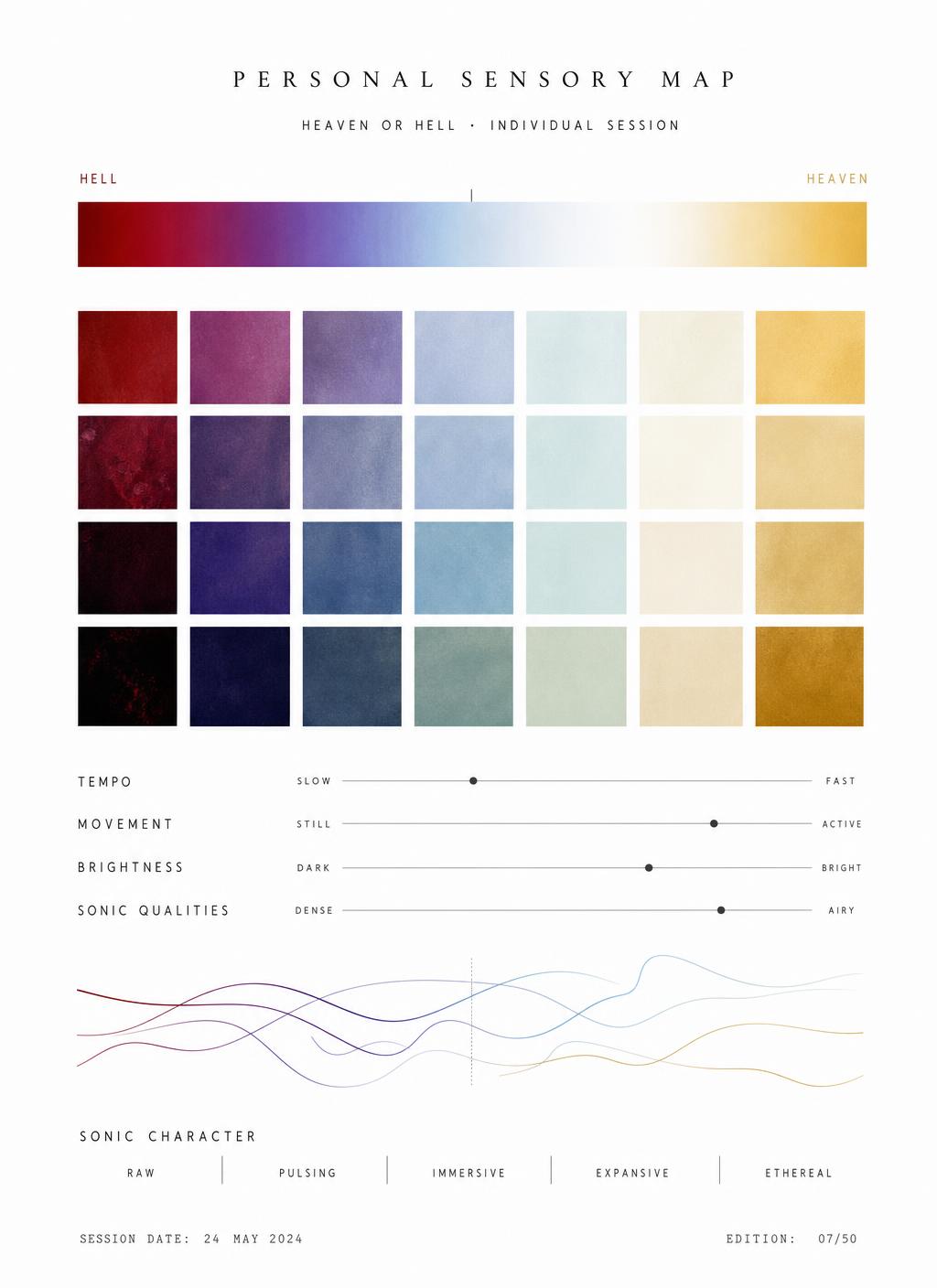
Personal Sensory Map
Each session may end with an optional artifact: a printed or digital edition composed from the visitor’s own encounter. It gathers the colours associated with activation and with settling, the visual speeds and movement qualities, the brightness and contrast responses, the sonic frequencies, the volume and spatial-sound relationships, the rhythmic qualities, and the relative patterns across the Heaven and Hell stages.
It is a reflective record rather than a result — a suggestion of how a person might begin to personalize the digital and physical environments they inhabit afterwards.
Related works
The Frontier Within
Physiology becomes an immersive portrait. Invisible bodily processes become perceptible as light, movement and space.
AutonoME
The environment learns from bodily response and acts back upon the participant, raising questions of agency and technological influence.
Artist’s note: sleep and the disappearing self
From early childhood, Bend was fascinated—and sometimes unsettled—by the threshold of sleep: the moment when the conscious sense of self seems to recede while the body continues to breathe, regulate itself and produce dreams.
Heaven or Hell returns to that early question. It places the visitor inside an environment co-authored by processes that ordinarily continue beneath deliberate awareness.
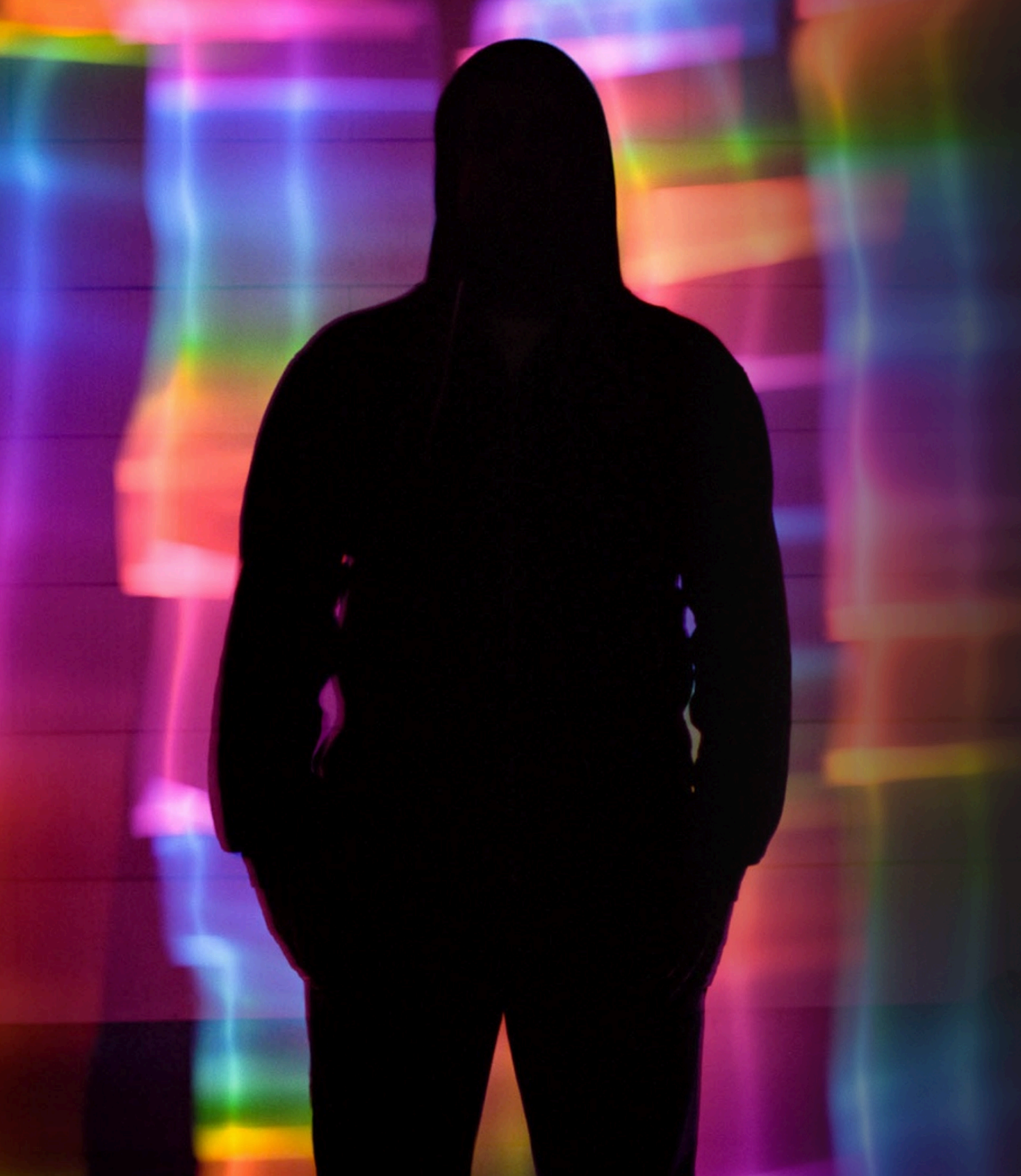
Archival image from the 2020 proposal — the physical installation remained unrealized.
Proposed sequence
The proposed sequence, as written in 2020 and never staged. The room would first study the visitor: establishing a physiological baseline, presenting changing visual and sonic stimuli, and mapping how breathing, pulse and other available signals respond. From those individual relationships it would compose two contrasting environments — a personalized Hell assembled from activating stimuli, followed by a personalized Heaven assembled from calming stimuli.
- 01
Baseline — the room listens
The visitor enters the translucent chamber. The visual and sonic environment is restrained and relatively neutral. The system establishes an individual reference state from the available physiological signals, including breathing and pulse. The participant may stand, sit or recline with eyes closed during part of this phase.
- 02
Mapping — the room learns
The installation introduces controlled variation and maps the relationships between what it emits and how the visitor responds. The phase is composed as a score rather than administered as a test.
- Colour
- Brightness
- Contrast
- Saturation
- Image movement
- Visual density
- Rhythm
- Sound frequency
- Pitch
- Volume
- Tempo
- Spatial proximity
- Silence
- Architectural light
- Optional scent
- 03
Hell — personalized activation
The system selects and combines the stimuli associated with stronger activation in this particular visitor. The room becomes an immersive composition that is not generic horror: it is meaningfully different for different people.
- Compression
- Instability
- Repetition
- Pressure
- Acceleration
- Visual density
- Sonic proximity
- Contrast
- Disorientation
- 04
Threshold — the reset
The environment gradually empties. Sound recedes, light becomes neutral, and the chamber gives both the nervous system and the visual composition a transitional pause.
- 05
Heaven — personalized calm
The system selects and combines the stimuli associated with settling in this particular visitor. This environment, too, differs from person to person.
- Spaciousness
- Slower rhythm
- Visual diffusion
- Softer transitions
- Resonance
- Distance
- Openness
- Reduced pressure
- Extended sound
- Breath-like pacing
- 06
Reflection — the personal sensory map
At the conclusion, visitors may receive an optional printed or digital artifact composed from their own session — a record of the encounter rather than a readout of it.
Adaptive-interface lineage
The adaptive mechanism of Heaven or Hell develops the technical logic documented in Hannes Bendfeldt’s granted Adaptive Interface patents, US 10,423,893 B2 and US 11,561,806 B2.
The patents describe systems that capture user data, determine relationships between physiological responses and media output, and continuously customize visual, audio and other output through machine learning to elicit an individualized change.
Within Heaven or Hell, that adaptive structure becomes artistic material. The patented logic is expanded from a screen-based interface into an architectural, audiovisual and multisensory environment.
Research and technical dossier(remaining 2020 proposal materials)
From the 2020 proposal

Archival image from the 2020 proposal — the physical installation remained unrealized.
- Title
- Heaven or Hell
- Concept
- 2020
- Visualization
- 2026
- Status
- Virtual realization of an unrealized personalized immersive installation
- Collection
- Virtual Realizations
- Art form
- Immersive physiological-computing installation · personalized adaptive environment · participatory media art
- Medium
- Projected image, architectural light, spatialized sound, translucent surfaces, camera-based physiological sensing, adaptive machine learning and optional olfactory output; generative image and video visualization
- Dimensions
- Variable
- Creator
- Hannes Bend
Virtual realization · Original concept 2020 · Digitally visualized 2026 · Unrealized installation