Virtual Realizations · 2014 / 2026
FORMLITH
An interactive thermal-imaging environment in which bodily presence becomes a shared field between physical and virtual space.
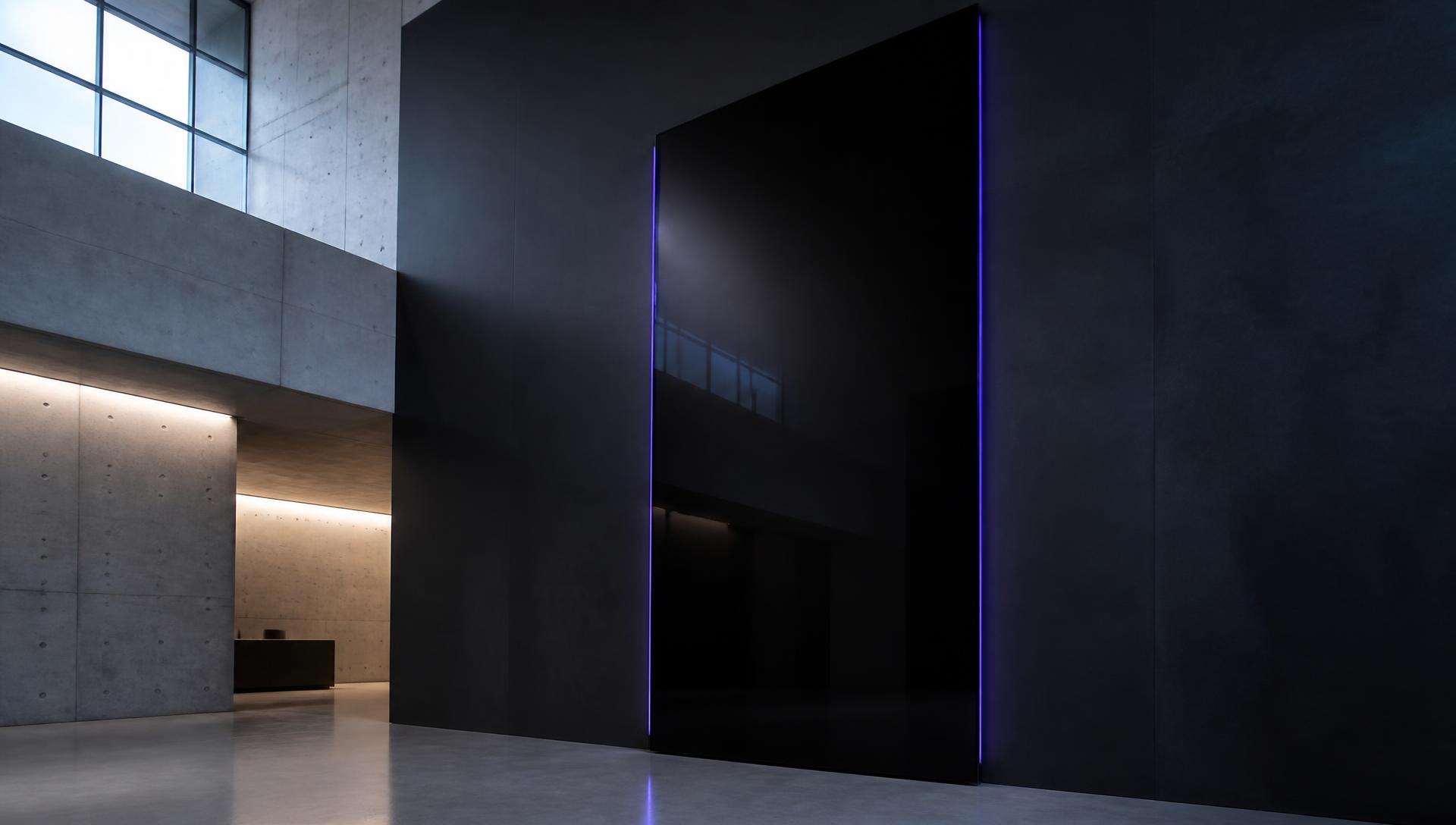
A single dark slab stands in a hallway — monolithic, wall-integrated or freestanding, showing nothing. It waits. When someone comes close, thermal and infrared sensing registers the arriving body and the surface wakes.
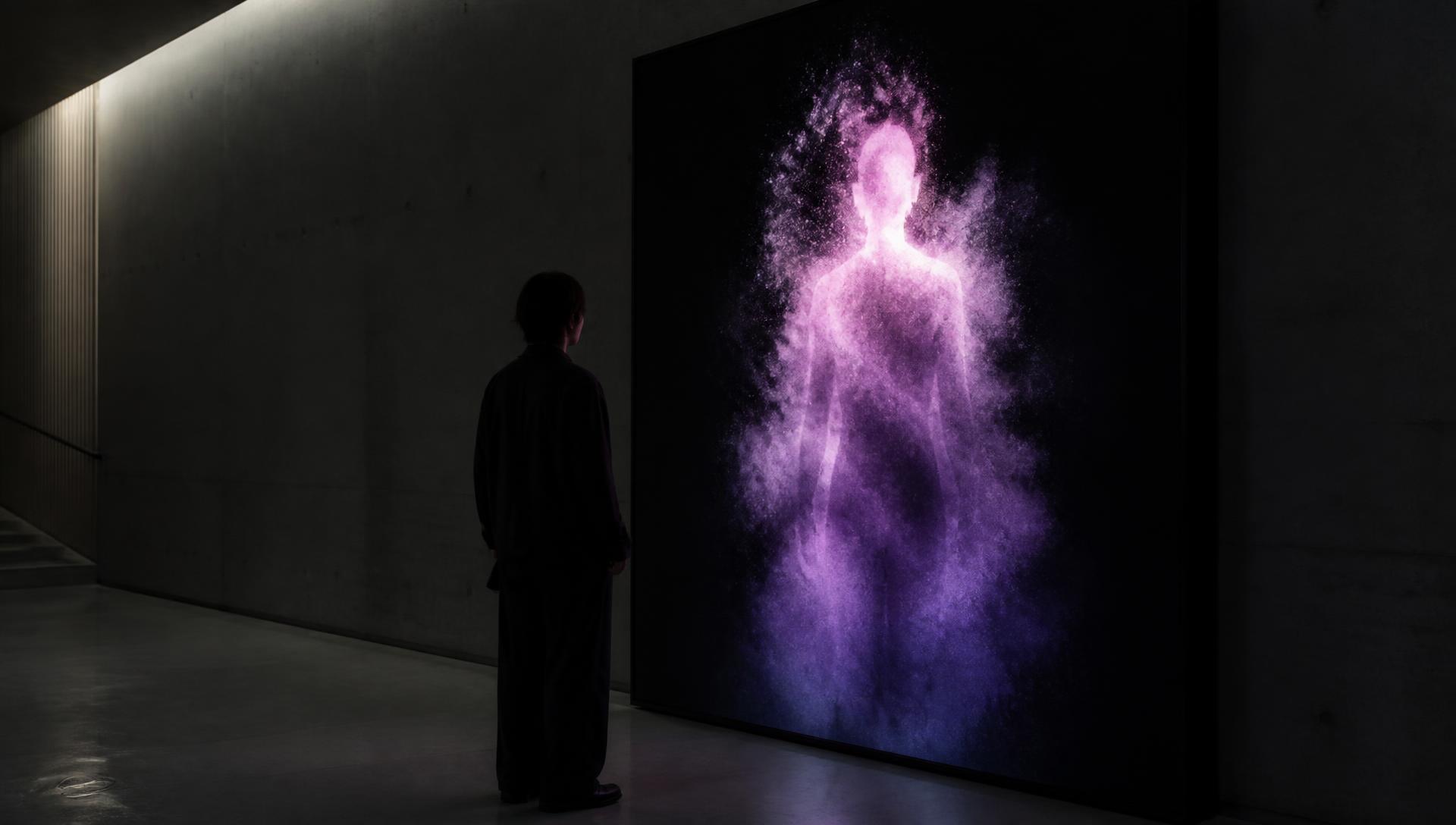
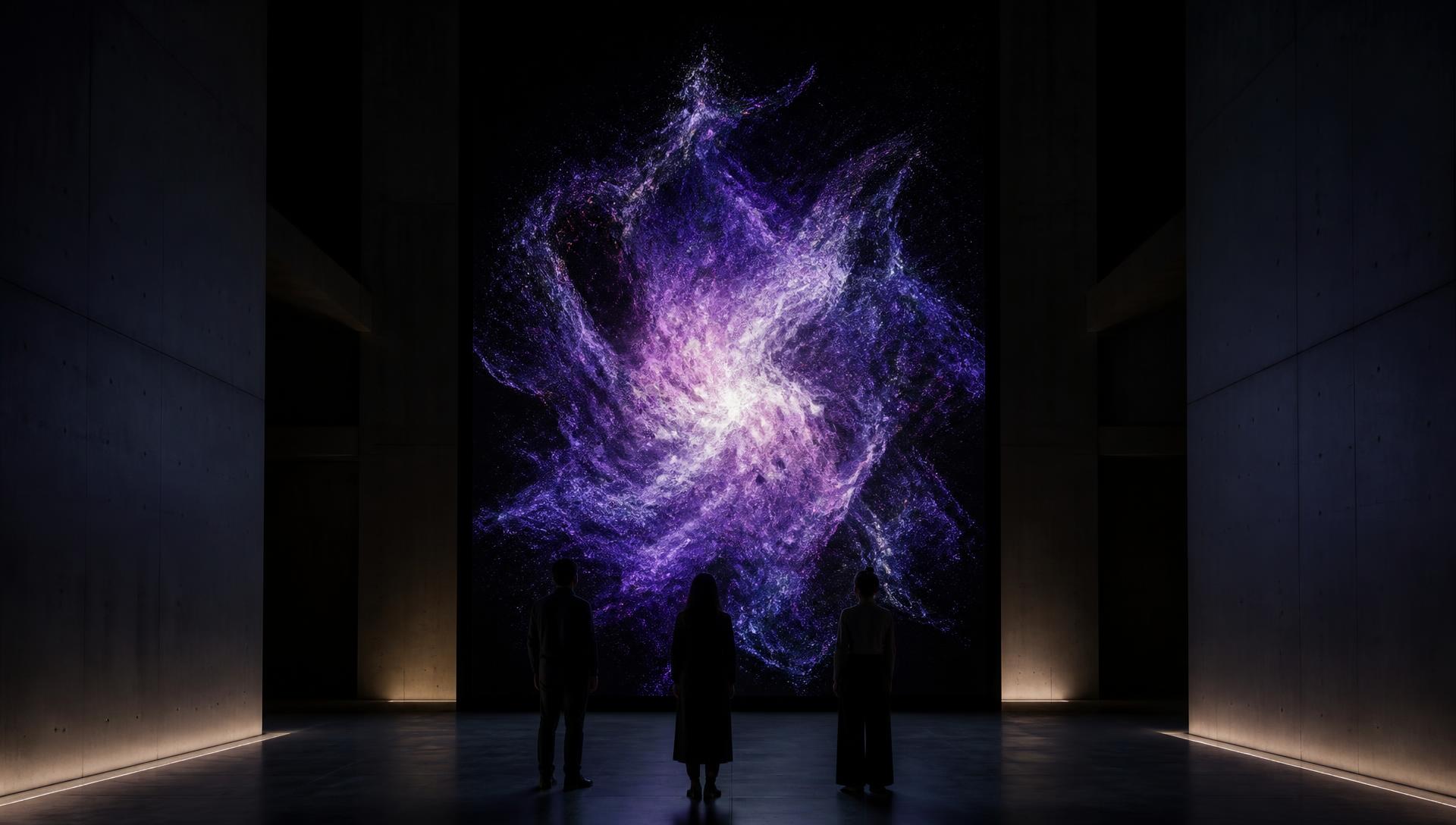
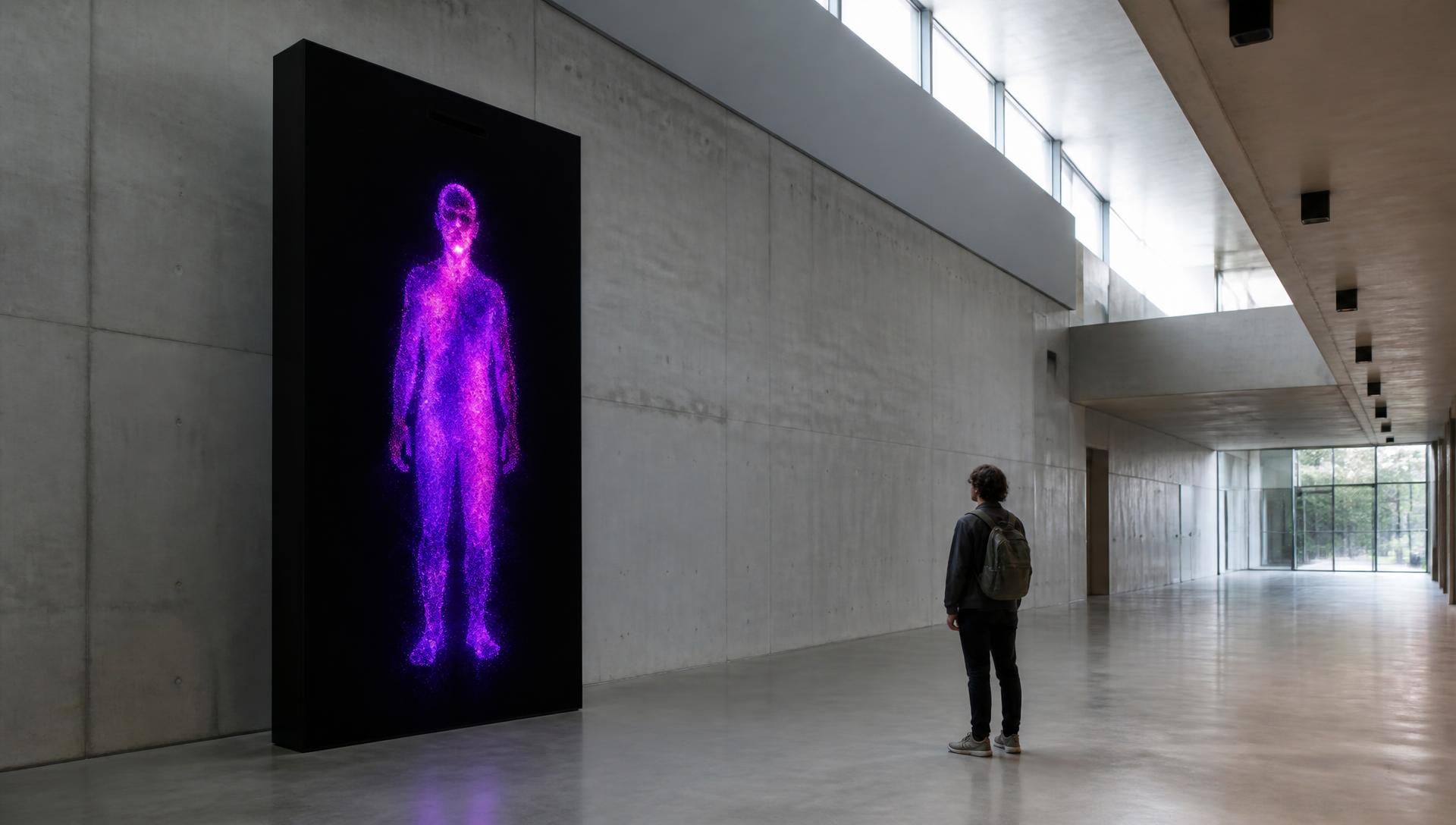
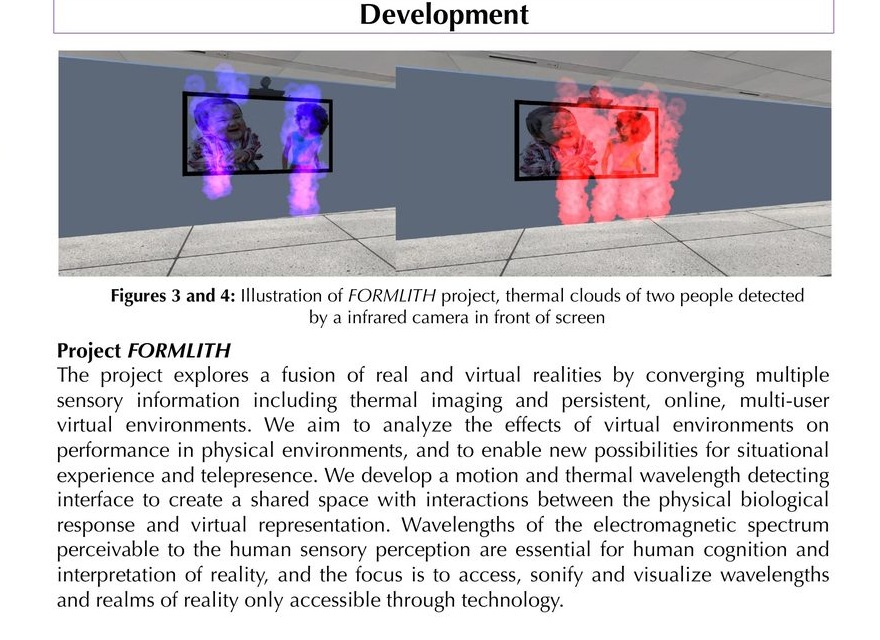
What returns is not a reflection. The visitor appears as a cloud of emitted heat: porous, unstable, without a fixed outline, and larger than the figure standing before it. A band of the spectrum we never see becomes the material of the portrait. When a second and a third person enter, the clouds do not sit side by side — they merge into one formation that belongs to no one and cannot be made alone. The screen holds a threshold: between visible and invisible wavelengths, between a body as outline and a body as field, between the hallway and the space that opens behind the glass.
Monolith / Interface
The form of FORMLITH refers deliberately to the black monolith in Stanley Kubrick's 2001: A Space Odyssey (1968): an opaque object that gives nothing away, and around which people gather, photograph, reach out and speculate. Its power in the film is that it cannot be read. Meaning arrives only as projection — whatever the people standing in front of it bring to it.
FORMLITH inverts that relation. The surface remains dark and unreadable until a body approaches, and then it answers with that body's own heat. The visitor is no longer confronting an object; they are the content of it. What was a screen for projection becomes an interface — and the unknown it mediates is not extraterrestrial but physiological, the part of ourselves we cannot ordinarily see.
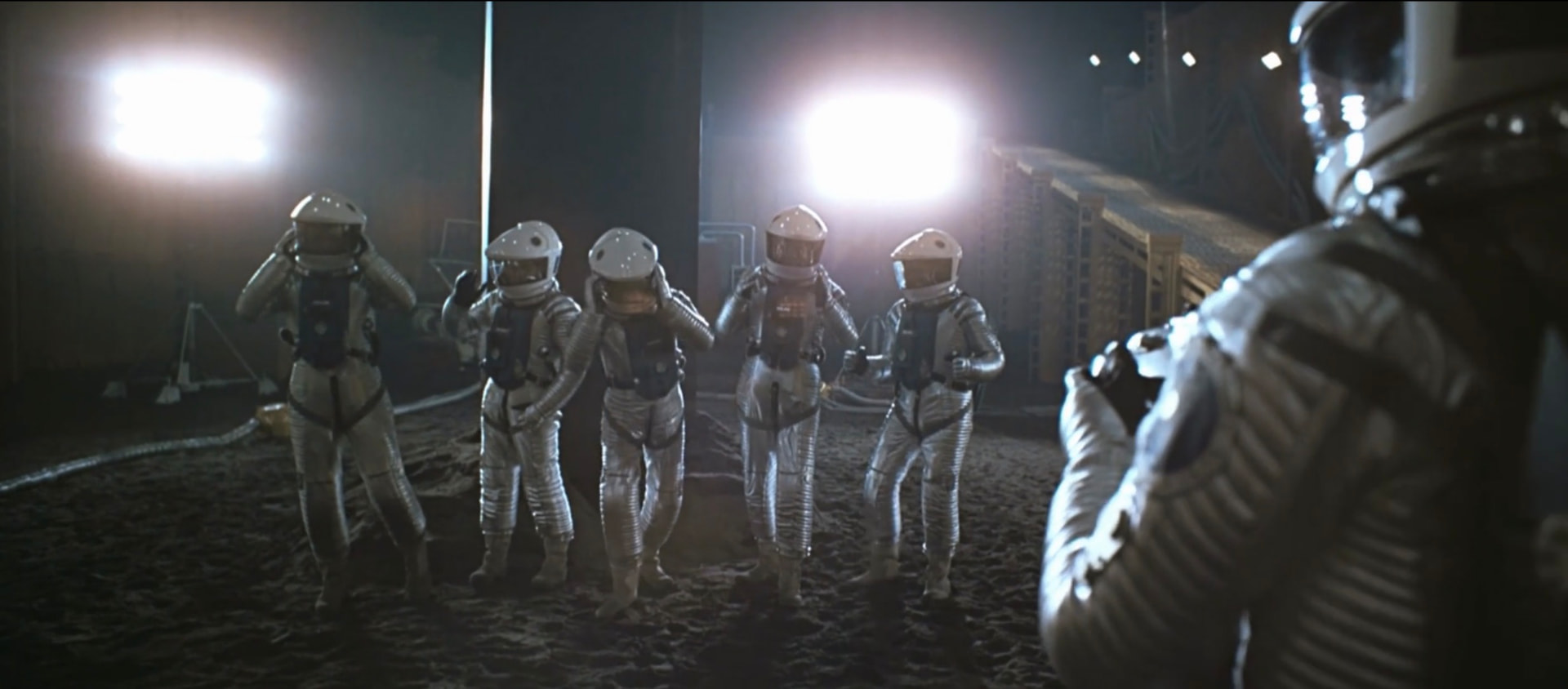
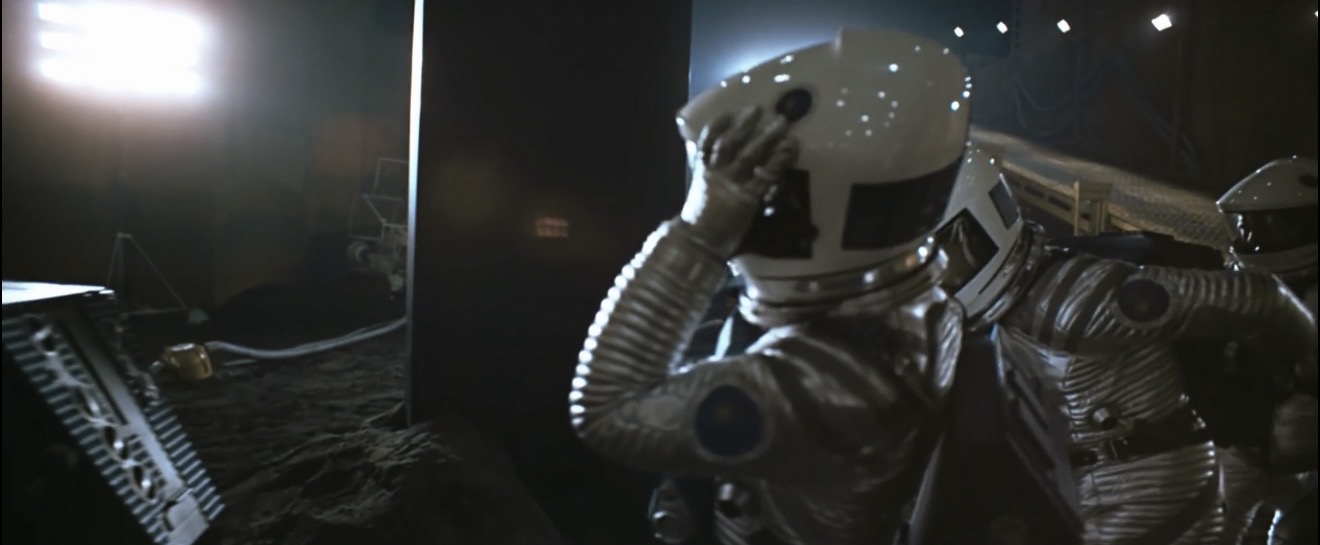
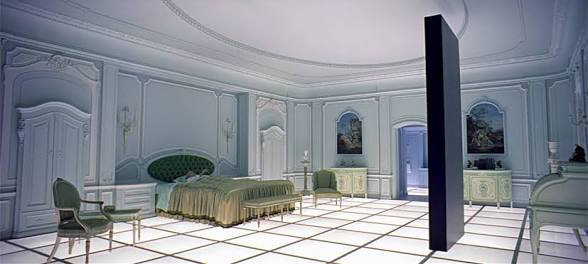
Cinematic reference — film stills from 2001: A Space Odyssey, dir. Stanley Kubrick, 1968 (MGM). Shown here as a conceptual reference only; not documentation of FORMLITH, and no affiliation with the film or its rights holders is implied.
Presented at AAAI 2016, Stanford
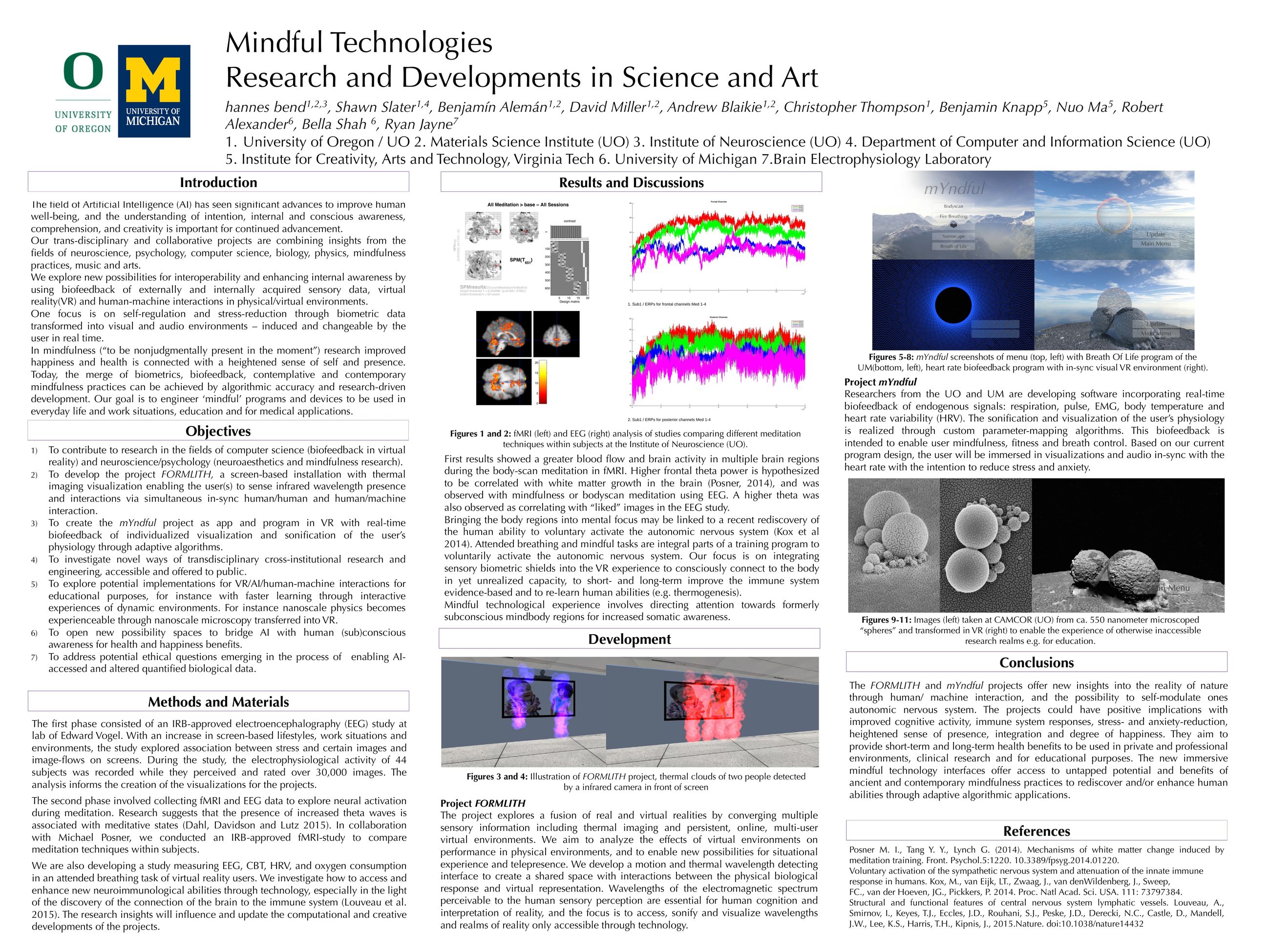
FORMLITH was presented publicly in 2016 at the AAAI 2016 Spring Symposium, Stanford University — the symposium series of the Association for the Advancement of Artificial Intelligence (AAAI) — alongside mYndful, within the metaverses research project. Both works appear on the research poster shown below and are described in the accompanying symposium paper: Mindful Technologies: Research and Developments in Science and Art, which received the Best Presentation award at the symposium.
How the work behaves
As proposed, a depth sensor would register arrival and a thermal/infrared sensor the heat a body emits. The screen would wake and derive a particle field from that heat map rather than from a conventional visible-light portrait, so the visitor would never appear as a likeness. Small physical movements would be amplified: a step becoming a drift of the whole field, a raised arm a plume. This is intended behaviour; the installation has not been built or tested.
Physical / virtual threshold
After a few seconds in the dark, near-spaceless field, the visualization opens into a rendered architecture — a sequence of rooms and thresholds the visitor moves through by moving in the hallway. The flat surface stops behaving like a picture plane and starts behaving like a doorway.
Shared presence
With several bodies present, the individual clouds merge and generate a new formation closer in behaviour to weather systems, fractals and attractors than to overlapping silhouettes. Presence becomes relational: the image belongs to no single person and cannot be produced alone.
Where The Frontier Within and AutonoME enclose a visitor inside a responsive room, FORMLITH stays outside the body and in public: a flat, architectural interface encountered in passing, where the encounter is with other people as much as with the machine.
Metaverses lineage
FORMLITH emerged from metaverses, the research project Hannes Bend began in October 2014 as artist-in-residence with the Institute of Neuroscience at the University of Oregon, alongside a visiting scholarship at the Benjamín Alemán Laboratory for Quantum and Nanoscale Physics. That work examined how patterns and wavelengths in visual stimuli correspond to states of attention, calm and perception — a question pursued through neuroaesthetics, mindfulness research and computational imaging, and carried here into a public work addressed to whoever happens to walk past it.
The 2016 AAAI paper situates FORMLITH within a collaboration between University of Oregon and Virginia Tech researchers, in the context of Virginia Tech’s Mirror Worlds work and Institute for Creativity, Arts, and Technology. That is the research lineage of the concept; the 2026 slab visualizations were not built at either institution.
The body does not end at the skin. What appears when a machine is asked to show the part of us we cannot see?
Technical context
The proposal assumes depth and thermal/infrared sensing at the top edge of the slab, real-time particle rendering driven by the heat map, and a rendered architectural scene entered after sustained presence. It is specified for everyday circulation space — a hallway, an atrium — rather than a gallery, so that the first audience is whoever is passing through.
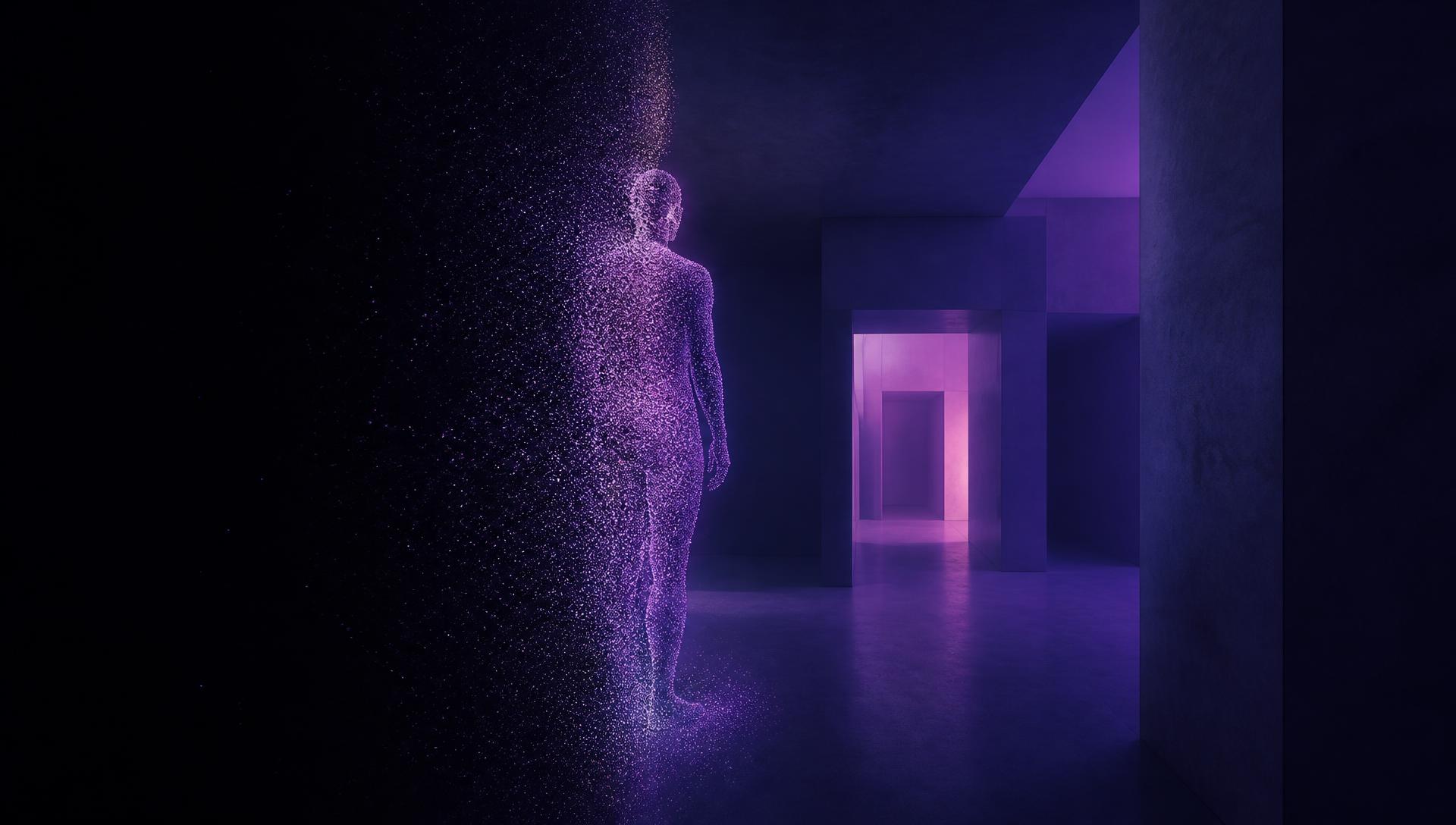
FORMLITH · interactive installation for a public passage.
Thermal and depth sensing, real-time rendering, projection or LED surface (proposed).
Conceived in 2014 within the metaverses research project and presented in 2016 at the AAAI 2016 Spring Symposium, Stanford University, as research — not as an exhibited installation. Proposed inputs: the passing visitor’s presence (depth) and body heat (thermal/infrared).
Cinematic reference — 2001: A Space Odyssey, dir. Stanley Kubrick, 1968 — conceptual reference only.
Original concept 2014 · digitally visualized 2026 · never built or exhibited