Case study · Breathing AI
What 10,000 Users Across 156 Countries Taught Breathing AI About Digital Wellbeing
Those figures are company-reported adoption numbers, according to Breathing AI's published product figures — not evidence that the product works. This is a founder’s account of what the usage actually revealed, what it changed in the product, and the four things it could not tell us.
In short
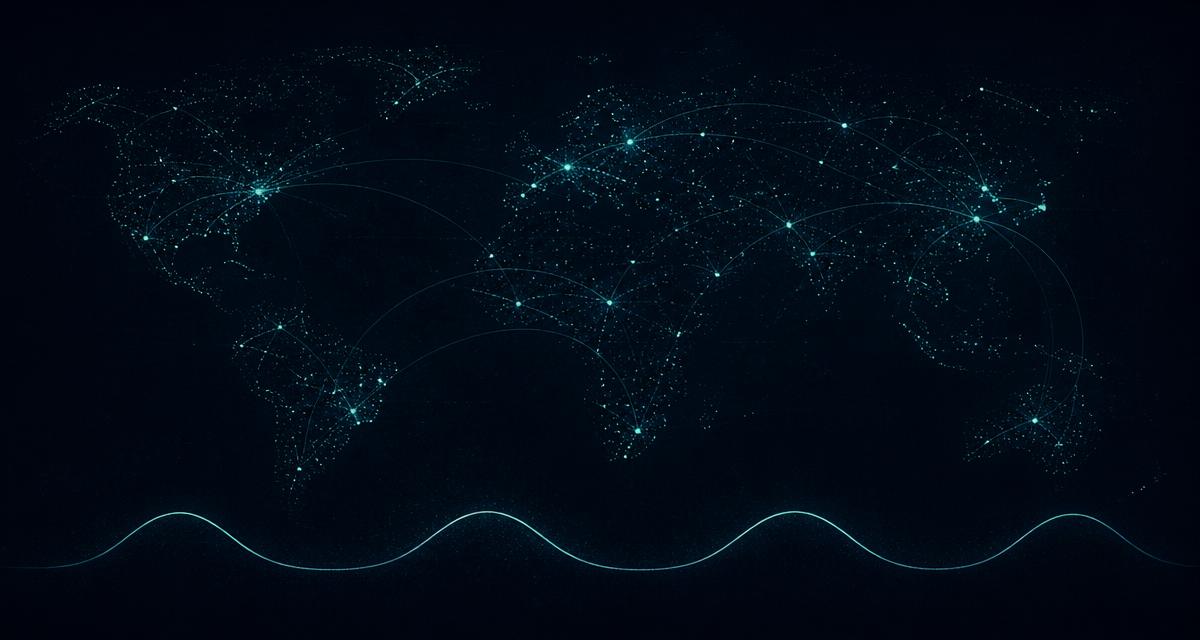
Breathing AI is a bio-adaptive workplace product: it observes signals from the working day and adjusts the screen environment and prompts a short breathing intervention rather than reporting a score. Its published figures — over 10,000 users, 156 countries, more than one million minutes of usage, according to Breathing AI's published product figures — establish that people use bio-adaptive software, not that it improves health. What global adoption taught us was narrower and more useful: friction beats accuracy, timing beats content, and a personal baseline is not an optimisation but a precondition.
The figures, and where they come from
Numbers in this category are routinely presented in a way that lets a reader mistake reach for effect. So here is every figure with its provenance and its limit, before any argument is built on top of it.
| Figure | What it means | What it does not mean |
|---|---|---|
| Over 10,000 users | Accounts or installs reached since launch. | Does not indicate active, retained or paying users. |
| 156 countries | Distinct countries represented in the user base. | Says nothing about depth of use in any one of them. |
| More than 1,000,000 minutes of usage | Cumulative time the product was running. | No time window is stated, and running time is not attention. |
| 5-star average, Chrome Web Store | Public store rating from users who chose to review. | Self-selected sentiment on a small base. Not an efficacy measure. |
Source: breathing.ai published product figures. Company-reported, from internal product analytics, not independently audited.
Percentage improvement figures published alongside these numbers are excluded from this article. They come from what users reported, with no instrument, sample size, time window or comparison condition stated. A percentage reduction in stress is a health claim, and an uncontrolled self-report cannot support one.
1. Adoption is a design constraint, not a marketing problem
The single largest determinant of whether a bio-adaptive product works in the field is not how well it senses. It is how many people leave it switched on. Every increment of sensing fidelity has an adoption cost — a permission prompt, a device to charge, a posture to hold — and in a workplace context that cost is paid daily by someone who did not ask for the product.
The practical consequence was that the product had to remain useful when the richest signal was unavailable. Reaching a wide, self-selected international user base only worked because the experience degraded gracefully: with a camera signal it adapts to a physiological baseline; without one it still works from time, interaction pattern and screen context. A product that is only valuable in its best-case sensing configuration will be uninstalled before it reaches that configuration.
2. The interruption is the product
A wellbeing product interrupts. That is unavoidable — a prompt that never arrives changes nothing. What adoption at this scale made obvious is that when it arrives dominates what it says. The same one-minute breathing prompt is a relief mid-afternoon and an intrusion thirty seconds before a meeting starts.
This is why the adaptation-policy layer described in the bio-adaptive stack matters more than the sensing layer for a consumer product. Rate limiting, confidence gating and deferral are not engineering hygiene; they are the difference between a product people keep and one they mute. The most valuable behaviour we added was the decision to do nothing.
3. Global reach exposed how personal a baseline is
A user base spread across 156 countries covers an enormous range of resting physiology, working hours, lighting conditions, camera hardware, screen environments and cultural expectations about what a computer may say to you about your body. Any fixed threshold that worked in one setting was wrong in another.
This is the strongest field confirmation of a point that appears theoretical when written in a paper: between-person variation is much larger than within-person variation, so a personal baseline is a precondition for the system to function at all, not a later refinement. It also settles the question of what such a system may assert. A reading that is unremarkable for one person and unusual for another is not a diagnosis and cannot be treated as one — it is only ever evidence of change relative to that individual.
4. What we could not measure
Being candid about this is more useful to a buyer than another figure. Four things the usage data does not establish:
- Whether it improved anyone’s health. There was no control condition, no validated instrument and no pre-registered outcome. Usage tells you people came back; it does not tell you why or what changed.
- Whether the adaptation or the pause did the work. A breathing prompt and an adaptive screen environment shipped together. Their contributions were never separated.
- Whether it works for people who did not adopt it. A voluntary consumer install is a self-selected population, and the people most likely to benefit from a wellbeing intervention are frequently the least likely to install one.
- Long-term effect. Novelty effects in wellbeing software are well documented. Cumulative minutes across a whole user base cannot distinguish sustained use from a long tail of first weeks.
Answering any of these requires a designed study rather than product analytics — which is precisely what a properly constructed enterprise pilot is for.
What this means for an enterprise deployment
If you are evaluating bio-adaptive software for an organisation, the useful reading of this case study is: consumer adoption proves the interaction model is tolerable at scale, and proves nothing about outcomes in your setting. Those need to be measured where you are, with a comparison group and an outcome you agreed before starting.
A pilot that produces a real answer needs a non-adaptive control, an outcome that is a task or experience measure rather than a health outcome, a stated sample and duration, a documented data-retention position before the first user is enrolled, and a stopping rule that lets the result be negative. I would rather run that pilot and have it fail than deliver a testimonial.
Evidence behind this article
Over 10,000 users spanning 156 countries and more than one million minutes of usage, according to Breathing AI's published product figures.
Company-reported — breathing.ai — published homepage statistics
Breathing AI participated in Techstars in 2021.
Third-party — Techstars portfolio record
Named inventor on the adaptive-interface patent family: US 10,423,893 (2019) and US 11,561,806 (2023).
Primary — Public patent records
Evidence & scope
- No health outcome is claimed. Adoption is not efficacy, and nothing in the usage data establishes an effect on stress, wellbeing or productivity.
- The percentage improvement figures published elsewhere on the Breathing AI site are self-reported by users with no stated methodology, sample or comparison condition. They are deliberately excluded from this article.
- The figures are company-reported and not independently audited. “Users” counts reach, not active or paying users, and the minute total has no stated time window.
- No claim is made that these results generalise to a different population, workplace or deployment model.
Considering bio-adaptive wellbeing for your organisation?
See how Breathing AI works in an enterprise context, or discuss a pilot designed to produce an answer rather than a testimonial.
Frequently asked questions
- How many people use Breathing AI?
- Breathing AI's published product figures state over 10,000 users across 156 countries and more than one million minutes of usage. These are company-reported adoption figures from the product's own analytics, not independently audited, and they count reach rather than active or paying users.
- Does Breathing AI reduce stress?
- That is not a claim made here. Adoption figures show that people use the product; they are not evidence of a health outcome. Establishing an effect on stress would require a controlled study with a validated instrument, a stated sample and a comparison condition — none of which the usage data provides.
- What did global adoption reveal that the product thesis did not?
- Three things: that the friction of enabling a camera dominates every accuracy consideration; that the timing of an intervention matters more than its content; and that the same physiological reading means different things for different people, which makes a personal baseline mandatory rather than a refinement.
- Is the underlying technology available to other companies?
- Yes. The sensing layer is available through VitalSign AI, and the adaptive-interface patent family behind it can be licensed. Both routes are described on the ventures pages.
Figures verified against the live breathing.ai homepage on 5 August 2026 and registered in the project evidence register. Where a claim could not be sourced, it is absent rather than estimated.